

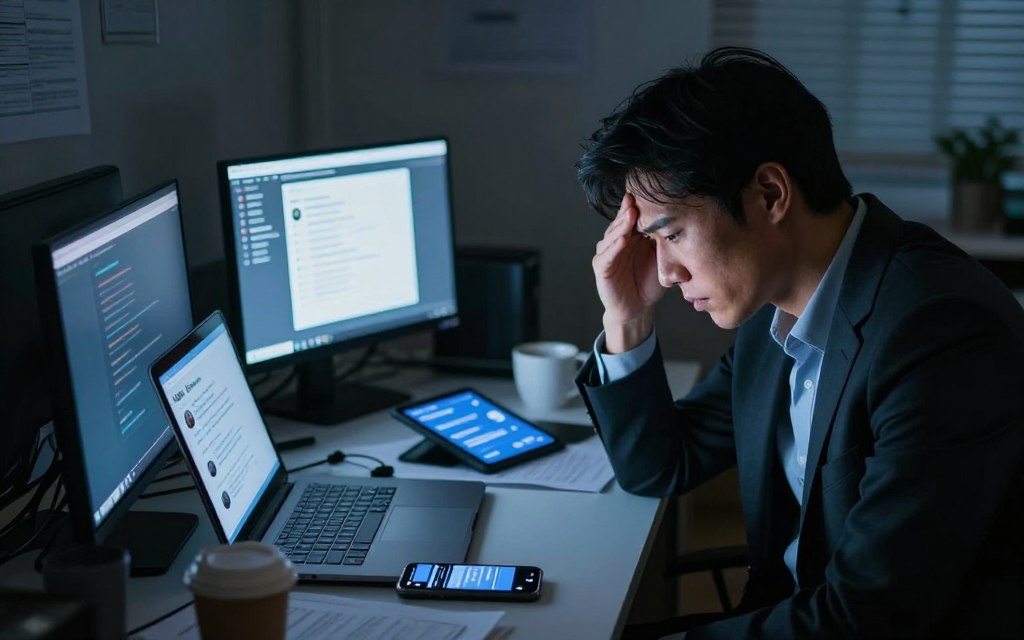
Many people ask, “does technology cause anxiety?” as digital life affects mental well-being. Constant connection raises concerns about stress from modern devices. Digital anxiety describes unease caused by interactions with technology.
Devices are not inherently harmful, but our habits can create measurable psychological stress. This link between technology and anxiety affects people of every age.
This article examines social media, excessive screen time, information overload, sleep disruption, cyberbullying, and fear of missing out (FOMO). These factors can help us find healthier ways to manage digital spaces.
Understanding this connection is the first step toward healthier habits in our increasingly connected world.
Key Takeaways
- Digital devices can contribute to feelings of stress and unease.
- Understanding digital anxiety is crucial for mental well-being.
- Excessive screen time and social media can exacerbate stress levels.
- Identifying healthier digital habits can improve mental health.
- Awareness of information overload is key to managing anxiety.
The Modern Digital Landscape and Rising Anxiety Levels
Smartphones and social media are now common, making technology stress and anxiety a pressing issue. In the United States, mental health and technology are closely linked in daily life.
Statistics on Technology Use in the United States
Recent studies show that the average American spends over seven hours each day using digital media. This time includes social media, streaming videos, and online communication. Around 85% of adults own a smartphone, which provides information and connection.
Many Americans feel anxious when separated from their devices. This anxiety from technology shows growing dependence on digital connection, which can increase stress and isolation.
Why Anxiety Rates Are Climbing Alongside Digital Adoption
Technology adoption has grown quickly, alongside anxiety rates, especially among younger people. Mental health professionals have seen a clear rise in diagnosed anxiety disorders over the past two decades. This trend raises questions about whether digital engagement contributes to mental health problems.
Correlation does not prove causation, but the timing suggests a connection worth exploring. As technology evolves, people and society must understand its effects on mental health and technology stress.
Related Posts:
- What Can Technology Do to You? Exploring the…

- How Technology Is Bad For Us The Negative Side Effects

- Does Technology Benefit Society The Impact on Modern Life

- How Technology Affects Our Daily Lives A Comprehensive Essay

- How Technology Affects Family Communication Digital…

- How Science and Technology Affect Our Lives…

Does Technology Cause Anxiety? The Science Behind the Connection
Understanding technology and anxiety requires studying how the brain responds to digital stimuli. Devices can trigger stress and uneasy feelings. This section examines brain responses, dopamine, and research on anxiety disorders and technology.
Neurological Responses to Digital Stimulation
Each notification or alert can cause a strong reaction in the brain. The amygdala processes emotions and may signal a threat. This response can release stress hormones like cortisol, especially after negative online interactions.
As Dr. David Greenfield, a psychologist specializing in technology addiction, notes:
“The brain’s threat-detection system can become hyperactive in environments saturated with digital stimuli.”
This hyperactivity can raise anxiety levels and increase technology-induced anxiety. A constant flow of information can keep users alert and feeling pressured to respond quickly.
The Role of Dopamine in Technology Use
Dopamine, known as the “feel-good” neurotransmitter, shapes our relationship with technology. It is released during pleasure or reward, which often happens on apps and social media. Many platforms use variable reward schedules—similar to gambling—to make users check devices often.
- Each notification can trigger a dopamine release, reinforcing the behavior of checking for updates.
- When users are unable to access their devices, they may experience withdrawal-like symptoms, including anxiety.
- This cycle can lead to compulsive checking behaviors that mimic addictive patterns.
This link helps explain why tech anxiety symptoms can affect heavy users. Unpredictable rewards can create a compulsive loop that feels hard to break.
Research Findings on Technology and Anxiety
Many studies have examined technology use and anxiety disorders. Research from the American Psychological Association shows a strong link between more screen time and higher anxiety. The National Institute of Mental Health found that social media users spending over three hours daily more often report anxiety symptoms.
The main findings are:
- Increased screen time is associated with higher levels of anxiety and depression.
- Frequent social media use can exacerbate feelings of inadequacy and social anxiety.
- Digital communication often lacks the emotional depth of face-to-face interactions, leading to feelings of isolation.
As technology changes, understanding its effects on mental health becomes more important. Recognizing technology-induced anxiety can help people manage digital lives and reduce stress.
Social Media and Its Impact on Mental Wellbeing
Social media anxiety can affect mental wellbeing in deep and complex ways. As people use Instagram, TikTok, Facebook, and X (formerly Twitter) more often, anxiety and stress may grow. Research links these platforms, especially image-focused ones, with social comparison and body image concerns.
Platforms Most Associated with Anxiety
Studies link Instagram and TikTok with increased feelings of anxiety. Their visual design encourages users to compare themselves with idealized images. This constant comparison can distort self-image and create feelings of inadequacy.
Many users then experience significant online stress, especially younger people.
The Cycle of Validation and Self-Esteem
Social media can create a validation cycle that weakens inner self-worth. Users may seek approval through likes, comments, and shares, relying on outside validation. When engagement falls below expectations, users may feel rejected and anxious.
“I find myself checking my posts repeatedly, hoping for likes to feel good about myself.”
Curated Reality and Its Psychological Effects
Curated reality makes mental wellbeing more difficult to protect. Users often show polished versions of their lives. Others may compare their unfiltered experiences with these idealized portrayals.
This disconnect can increase loneliness and inadequacy, especially among adolescents and young adults. The pressure to maintain a perfect online persona can harm overall mental health.
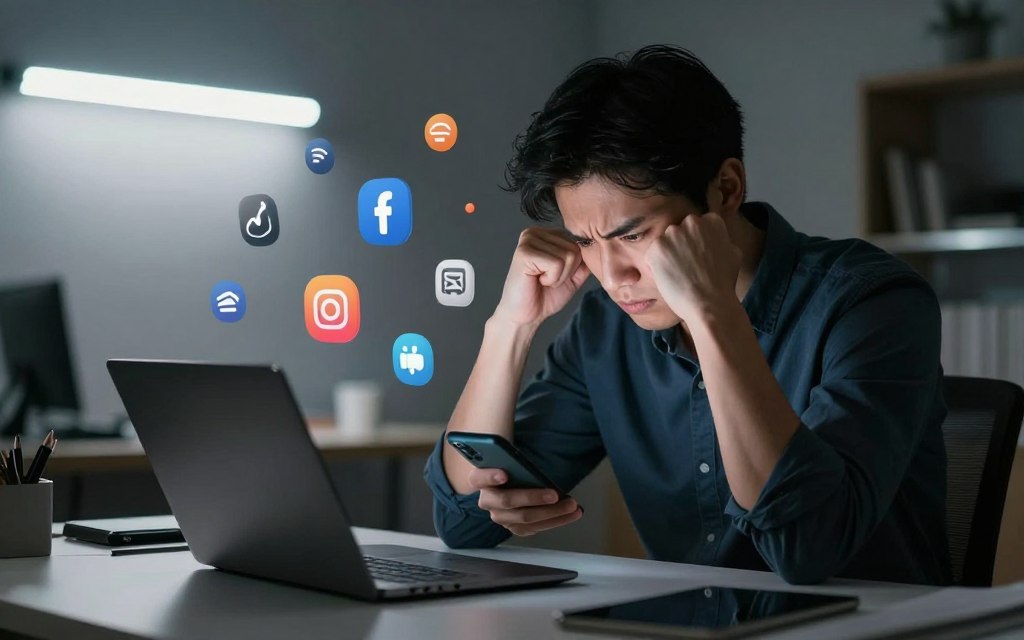
Understanding these patterns helps promote digital wellbeing. As we use social media, we must recognize its mental health effects and find ways to reduce online stress.
Screen Time, Blue Light, and Cognitive Overload
Examining screen time and cognitive overload reveals alarming trends. As we rely more on digital devices, we spend more time in front of screens. Too much screen time can affect brain function and raise anxiety levels.
How Excessive Screen Time Affects the Brain
Research shows that long screen exposure can reduce gray matter density in brain areas linked to attention and emotional control. This change may increase anxiety and make stress harder to manage. Cognitive overload happens when the brain receives more information than it can process, causing screen time anxiety.
Blue Light Exposure and Cortisol Levels
Blue light from screens affects the body’s stress response. It can lower melatonin, disrupt natural sleep cycles, and raise cortisol levels. This response can cause chronic low-grade stress and digital overload, as the body struggles with constant stimulation.
Attention Span and Digital Fatigue
Constant digital stimulation can fragment attention and cause digital fatigue. This mental exhaustion may cause irritability, trouble concentrating, and higher anxiety. Notifications and distractions make mental health effects important to understand, especially for smartphone anxiety.
Resources like the connection between digital overload and mental health can provide valuable insights.
Information Overload and Decision Fatigue in the Digital Age
Today’s fast-paced digital world brings a huge amount of information. Countless notifications, emails, and choices can strain our mental resources.
Information overload can fuel internet anxiety and decision fatigue, harming our well-being.
The Cost of Constant Notifications
Every ping from our devices pulls attention away from our current task. Research shows that each alert acts as a brief interruption.
Our brains must switch contexts, which can create constant alertness and anxiety-like symptoms. One study found that a nearby smartphone can reduce focus.
Decision Paralysis from Endless Choices
In a world full of options, decision paralysis is common. Choosing a movie or product can overwhelm our decision-making skills.
Too many choices can cause avoidance and procrastination. Decision fatigue drains mental energy and makes satisfaction harder to find.
Mental Bandwidth and Productivity Loss
Information overload and decision fatigue can greatly reduce mental bandwidth. When our thinking power drops, productivity suffers.
Manageable tasks may feel daunting, increasing stress from technology use and stress. Psychologist Barry Schwartz noted, “The more choices we have, the more we want the right choice.”
He added, “This can lead to anxiety.”
| Factor | Impact on Anxiety | Example |
|---|---|---|
| Constant Notifications | Increases stress and disrupts focus | Smartphone alerts |
| Endless Choices | Leads to decision paralysis | Streaming services |
| Mental Bandwidth | Reduces productivity | Work tasks |
Managing tech anxiety is crucial in our digital age. Recognizing information overload helps us reduce its effects.
Limiting notifications, simplifying choices, and prioritizing tasks can restore mental clarity and lower stress.
Sleep Disruption from Constant Connectivity
Digital devices can disrupt our natural sleep patterns. After a long day, many people use screens for entertainment or work messages instead of relaxing. This constant use can block the body’s natural wind-down process and make falling asleep harder.
How Devices Interfere with Sleep Cycles
Digital devices emit blue light, which can suppress melatonin, the hormone that helps regulate sleep. This delay can make sleep start later and lower overall sleep quality. Digital content can also stimulate the brain when it should be slowing down.
Many people struggle to leave social media or work notifications behind. They feel pressure to stay connected, which can feed technology addiction and make bedtime harder.
The Link Between Poor Sleep and Anxiety
Research shows a strong link between poor sleep and higher anxiety levels. Sleep loss strengthens the brain’s threat response, making people more sensitive to stress. Lack of sleep also harms emotional control and can increase anxiety.
This cycle harms digital mental health: technology disrupts sleep, anxiety grows, and nighttime use becomes a coping tool.
Bedtime Technology Habits to Reconsider
To reduce these problems, people should rethink certain bedtime technology habits. Here are some practices to avoid:
- Scrolling through social media in bed
- Checking work emails late at night
- Using devices as alarm clocks
A digital detox before bed can improve sleep quality and overall mental health.
| Technology Habit | Impact on Sleep | Suggested Alternative |
|---|---|---|
| Using devices in bed | Increases alertness and delays sleep onset | Read a book or practice relaxation techniques |
| Late-night social media scrolling | Stimulates the brain, causing anxiety | Engage in mindfulness or meditation |
| Checking emails before sleep | Heightens stress and disrupts relaxation | Set a specific time for email checks during the day |
Cyberbullying, Online Harassment, and Digital Stress
In today’s connected world, digital communication also has a dark side. Cyberbullying and online harassment affect countless people, and their spread alarms mental health professionals and advocates.
The Prevalence of Online Harassment in the U.S.
Statistics show a troubling reality. About 40% of American adults report experiencing cyberbullying or online abuse, according to recent surveys.
These behaviors affect teenagers and adults across ages and demographic groups. Social media platforms often fuel this behavior because anonymity can reduce accountability.
Psychological Consequences for Victims
The effects of online harassment reach far beyond the screen. Victims may experience anxiety, depression, and post-traumatic stress symptoms. Repeated attacks can cause isolation and social withdrawal.
Traditional bullying may stay in certain places, but digital harassment can invade a victim’s personal space. This abuse can feel impossible to escape. Constant exposure to hostility can cause anxiety from technology and add to growing technology stress.
Anonymity and Disinhibition Online
Anonymity is one of the most alarming parts of online harassment. People can hide behind screens, which often encourages disinhibited behavior. This distance and lack of accountability may lead to harmful actions.
People may do things online that they would avoid face to face. These actions can worsen online stress.
Understanding cyberbullying and online harassment helps us create effective ways to fight these problems. Recognizing their psychological effects and anonymity’s role helps us support victims and build a safer digital environment.
FOMO, Social Comparison, and the Pressure to Stay Connected
In today’s hyper-connected world, staying linked can create overwhelming psychological pressure. One major cause of this anxiety is the Fear of Missing Out, commonly known as FOMO.
FOMO describes the feeling that others enjoy rewarding experiences while you are absent. Social media makes this feeling stronger by showing others’ activities all the time.
Defining Fear of Missing Out in the Digital Era
FOMO is a recognized psychological phenomenon in the digital age. It involves more than missing events; it also means feeling excluded from enjoyable experiences.
Scrolling through curated feeds of exciting moments can make us feel inadequate. This feeling can increase social media anxiety and create a constant need to check our devices.
Social Comparison Theory and Online Platforms
Social Comparison Theory explains how people naturally judge themselves by comparing their lives with others. Social media greatly intensifies this process. Users constantly see images and posts that show idealized versions of life.
This can create digital anxiety when people compare their worth with those they see as better off. This upward comparison often lowers self-esteem and increases anxiety.
The 24/7 Availability Expectation
Digital technology creates pressure to stay available 24/7, causing constant alertness. Responding quickly to messages, emails, and social media can be exhausting.
This nonstop connection creates anxiety because people feel they must always be “on.” Some call this smartphone anxiety, which can cause major stress when people fear slow responses.
| Phenomenon | Description | Impact on Mental Health |
|---|---|---|
| FOMO | The fear of missing out on rewarding experiences | Increases feelings of inadequacy and anxiety |
| Social Comparison | Evaluating oneself against others on social media | Can erode self-esteem and increase anxiety |
| 24/7 Availability | Expectation to be constantly connected | Leads to chronic stress and smartphone anxiety |
Workplace Technology, Remote Work, and Burnout
Remote work has changed how employees use technology, creating new challenges. Smartphones and digital tools keep people connected, blurring work and personal life. This always-on culture shows how technology and anxiety can grow together when workers feel pressured to stay available.
Many workers feel uneasy when they cannot answer messages quickly. This pressure can cause long-term stress and make it hard to disconnect from work. As work and personal boundaries fade, managing tech anxiety supports mental well-being.
Always-On Culture and Boundary Erosion
The demand to stay reachable can create a heavy sense of duty. This need for quick replies may make workers feel inadequate when they fear missing important messages. Stress from constant connection can contribute to burnout.
Video Conferencing Fatigue and Zoom Anxiety
Video conferencing is another workplace technology that can increase anxiety. Many people feel drained after virtual meetings. Seeing yourself on camera and missing nonverbal cues can make calls intense and tiring.
Research shows that video calls require more focus than in-person meetings. This can increase fatigue and create digital overload. Called Zoom fatigue, this strain comes from long eye contact and pressure to perform online.
Email Overload and After-Hours Communication
After-hours email can increase anxiety. A steady flow of messages creates urgency and makes time harder to manage. Workers may check inboxes during personal time, causing stress and distraction.
To reduce this digital overload, workers should set clear limits for technology use. Strategies for managing tech anxiety can support a healthier work-life balance and lower burnout risk.

Practical Strategies to Reduce Technology-Related Anxiety
In today’s fast-paced digital world, managing technology-related anxiety is essential. Practical steps can help you build a healthier relationship with technology.
Digital Detox Practices That Work
A digital detox can improve your mental wellbeing. Avoiding technology completely may be unrealistic, but a partial detox can still help.
Scheduled Device-Free Times
Set regular times to put devices away. Try these device-free periods:
- Meals
- The first hour after waking up
- The hour before bedtime
These breaks can help you reconnect with your surroundings and reduce anxiety.
Mindful Consumption Habits
Use technology with a clear purpose. Ask why you reach for your phone and whether that activity matches your values. This awareness can support healthier habits and help prevent technology addiction.
Setting Healthy Boundaries with Technology
Managing technology, rather than letting it manage you, can reduce anxiety. Use these strategies to set healthy boundaries:
Notification Management
Review your notifications and remove unnecessary ones to reduce interruptions. Fewer notifications can lower the anxiety they often trigger.
Curating Your Digital Environment
Unfollow accounts that cause negative feelings and use content filters. A more positive online experience can improve your digital wellbeing.
When to Seek Professional Help
Sometimes, technology-related anxiety becomes overwhelming. If you notice clinically significant signs, seek professional help for your digital mental health. Cognitive behavioral therapy is one effective treatment option.
| Strategy | Description | Benefits |
|---|---|---|
| Scheduled Device-Free Times | Regularly disconnecting from devices during specific times. | Improved focus and reduced anxiety. |
| Mindful Consumption | Being intentional about technology use. | Enhanced self-awareness and healthier habits. |
| Notification Management | Minimizing unnecessary notifications. | Less distraction and anxiety. |
| Curating Digital Environment | Following positive accounts and filtering content. | Improved mental health and positivity. |
By using these strategies, you can support better digital wellbeing and reduce tech anxiety symptoms. Remember, it is important to prioritize your mental health in this digital age. For more insights on the negative effects of technology, visit this link.
Conclusion
Understanding the link between technology and anxiety matters in today’s digital age. Many people experience digital anxiety from social comparison, information overload, and constant connection through modern technology. Does technology cause anxiety? Not by itself, but the way people use it can increase stress.
We do not need to abandon technology entirely. Instead, we can build a healthier relationship with our devices through digital detoxes, boundaries, and mindful online interactions. These small, intentional steps can reduce technology-related anxiety and help people regain control of their digital lives.
Awareness is the first step toward improvement as we navigate this landscape. Understanding technology’s effects on mental wellbeing helps us make informed choices. A balanced approach can improve overall quality of life while reducing the harmful effects of digital anxiety.