


Introduction
Technology has transformed nearly every aspect of modern life, but it also comes with significant downsides. From reduced physical activity to social isolation and privacy erosion, the negative effects of technology on daily life are increasingly hard to ignore. While technology offers undeniable benefits, understanding why technology is bad for our health, relationships, and society is essential for finding a healthier balance. This guide explores ten major negative effects of technology backed by research and practical strategies to mitigate them.
1. Reduced Physical Activity and Sedentary Lifestyles
One of the most well-documented negative effects of modern technology is the sharp decline in physical activity. With entertainment, work, and social interaction all available from a screen, many people spend hours each day sitting. Studies link prolonged sedentary behaviour to obesity, cardiovascular disease, and poor posture. The convenience of streaming, online shopping, and remote work means steps that once required movement — walking to a shop, visiting a library, commuting — are now done from a chair. Incorporating standing desks, regular movement breaks, and screen-time limits can help counteract this growing health concern.
2. Sleep Disruption and Blue Light Exposure
The blue light emitted by smartphones, tablets, and laptops interferes with the body’s natural production of melatonin, the hormone responsible for regulating sleep. Scrolling through social media or watching videos late into the night tricks the brain into thinking it is still daytime, making it harder to fall asleep and reducing sleep quality. Poor sleep is linked to weakened immunity, impaired cognitive function, and mood disorders. Using night mode settings, establishing a digital curfew an hour before bed, and keeping devices out of the bedroom are simple but effective ways to protect your sleep hygiene.
3. Mental Health Impacts: Anxiety and Depression
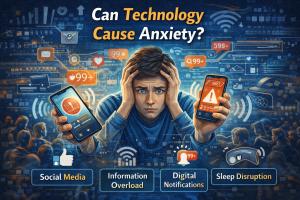
Excessive technology use, particularly social media, has been linked to rising rates of anxiety and depression. Constant exposure to curated highlight reels of other people’s lives can fuel feelings of inadequacy, while the pressure to stay connected and respond immediately creates chronic stress. Cyberbullying, doomscrolling, and fear of missing out (FOMO) compound these effects, especially among younger users. Research from the Royal Society for Public Health found that platforms like Instagram and TikTok are associated with poor body image and increased anxiety. Setting boundaries around social media use and prioritising offline activities can significantly improve mental well-being.
4. Privacy Erosion and Data Exploitation
Every online interaction generates data — search history, location, browsing habits, purchase patterns, even biometric information. Tech companies collect, analyse, and monetise this data, often without users fully understanding the extent of the surveillance. Data breaches have exposed the personal information of millions, leading to identity theft and financial fraud. The Cambridge Analytica scandal and numerous data leaks demonstrate how easily personal data can be weaponised. Using VPNs, reading privacy policies, limiting app permissions, and choosing privacy-focused alternatives are practical steps toward reclaiming your digital privacy.
5. Social Isolation and Reduced Face-to-Face Interaction
Paradoxically, the technology designed to connect us can also isolate us. When meaningful face-to-face interactions are replaced with text messages, emojis, and likes, the quality of social connection suffers. Humans are wired for real-time, in-person communication that conveys tone, body language, and emotional nuance — elements that digital communication strips away. Studies show that heavy social media users report higher levels of perceived social isolation despite spending more time “connected” online. Making a conscious effort to prioritise in-person meetups, phone calls over texts, and device-free social time can rebuild genuine connections.
6. Attention Span Reduction and Information Overload
The constant stream of notifications, alerts, and infinite scroll feeds has fragmented our ability to concentrate. Research suggests the average human attention span has decreased significantly in the digital age, with many people struggling to read long-form content or focus on a single task for more than a few minutes. Multitasking between apps, tabs, and devices creates an illusion of productivity while actually reducing efficiency and cognitive performance. Practicing single-tasking, using website blockers during focused work periods, and scheduling regular digital detox sessions can help restore your ability to concentrate deeply.
7. Digital Addiction and Compulsive Behaviour
Tech companies design their platforms to be addictive. Variable rewards, infinite scrolling, pull-to-refresh mechanics, and personalised recommendations all exploit psychological vulnerabilities to keep users engaged as long as possible. Smartphone addiction is now recognised as a behavioural disorder in some clinical contexts, with symptoms including compulsive checking, withdrawal when disconnected, and interference with daily responsibilities. The dopamine-driven feedback loop of likes, shares, and notifications creates craving cycles similar to those seen in substance addiction. Recognising these patterns and implementing strict usage boundaries — such as app timers, grayscale display, and phone-free zones — can break the cycle.
8. Environmental Impact of E-Waste and Energy Consumption
The technology industry has a massive environmental footprint. Manufacturing smartphones, laptops, and data centres requires rare earth minerals, vast amounts of water, and energy-intensive processes that contribute significantly to carbon emissions. Electronic waste (e-waste) is the fastest-growing waste stream globally, with millions of tons ending up in landfills where toxic materials leach into soil and water. Planned obsolescence — designing devices with limited lifespans — exacerbates the problem by encouraging frequent upgrades. Choosing repairable devices, recycling electronics properly, extending upgrade cycles, and supporting right-to-repair legislation can reduce your personal tech footprint.
Related Posts:




9. Cybersecurity Threats and Online Fraud
As more of our lives move online, the risk of cybercrime grows. Phishing attacks, ransomware, identity theft, and financial fraud affect millions of people every year. Cybercriminals exploit human psychology — urgency, fear, trust — to trick victims into revealing passwords, bank details, or personal information. Small businesses and individuals are increasingly targeted because they often lack robust security measures. Using strong, unique passwords with a password manager, enabling two-factor authentication, keeping software updated, and staying vigilant about suspicious emails and messages are essential defences in today’s threat landscape.
10. Impact on Children’s Development
Children growing up surrounded by screens face unique developmental challenges. Excessive screen time in early childhood has been linked to delayed language development, reduced attention span, and poorer emotional regulation. Social media exposure during adolescence can distort body image, normalise cyberbullying, and create unrealistic expectations about relationships and success. The American Academy of Pediatrics recommends limiting screen time based on age and emphasising the importance of unstructured, device-free play. Parents can model healthy tech habits, use parental controls thoughtfully, and ensure that screen time does not replace physical activity, reading, and family interaction.
Finding a Healthier Balance with Technology
Understanding why technology is bad does not mean rejecting technology altogether. The goal is mindful, intentional use rather than complete abstinence. Setting clear boundaries — no phones at the dinner table, screen-free mornings, app timers — allows you to enjoy the benefits of technology without falling victim to its downsides. Regular digital detoxes, spending time in nature, cultivating offline hobbies, and prioritising real-world relationships all contribute to a healthier relationship with technology. By staying informed about the risks and taking proactive steps to mitigate them, you can harness the power of technology without letting it control your life.
Frequently Asked Questions
What are the main negative effects of technology on mental health?
The primary negative effects include increased anxiety and depression from social media comparison, sleep disruption from blue light exposure, digital addiction through compulsive checking behaviours, and social isolation despite being constantly connected. Setting boundaries around screen time and prioritising offline activities can help mitigate these effects.
How does technology affect children’s development?
Excessive screen time in early childhood is linked to delayed language development, reduced attention span, and poorer emotional regulation. During adolescence, social media exposure can negatively impact body image and create unrealistic expectations. The American Academy of Pediatrics recommends age-appropriate screen time limits and emphasises unstructured, device-free play for healthy development.
Can technology addiction be treated?
Yes, digital addiction can be managed through structured interventions including app timers, scheduled digital detox periods, grayscale display settings, and professional support when needed. Cognitive behavioural therapy (CBT) has shown effectiveness in treating compulsive technology use. Recognising the addictive patterns built into platforms is the first step toward regaining control.
How does technology contribute to environmental damage?
Technology’s environmental impact includes carbon emissions from manufacturing and data centres, resource depletion from rare earth mineral mining, and the growing problem of e-waste. Planned obsolescence encourages frequent device upgrades, worsening the waste stream. Choosing repairable devices, extending upgrade cycles, and properly recycling electronics can reduce your environmental footprint.
What steps can I take to reduce the negative effects of technology in my daily life?
Practical steps include establishing screen-free times (especially before bed), using app timers and website blockers, turning off non-essential notifications, keeping devices out of the bedroom, practising single-tasking, scheduling regular digital detoxes, and prioritising in-person social interactions and outdoor activities. The key is mindful, intentional use rather than complete abstinence.