
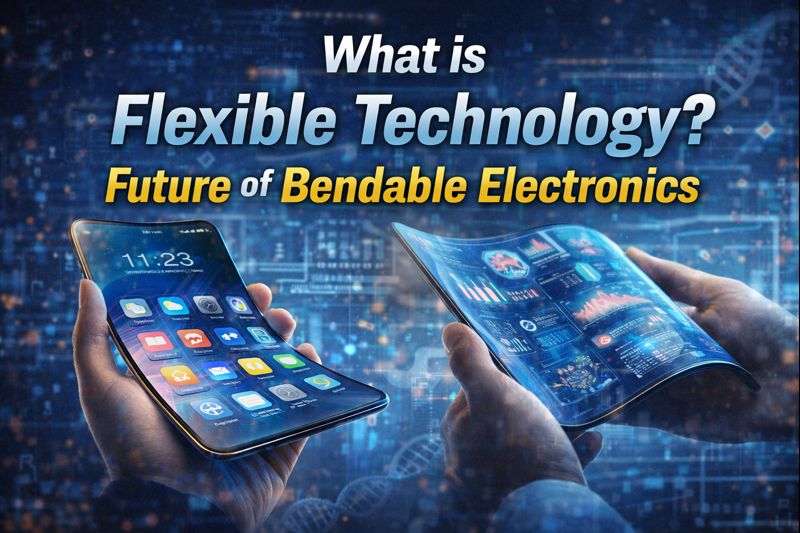
Imagine a world where your phone folds neatly into your pocket like a wallet, where a computer screen rolls up like a newspaper, or where medical sensors stick to your skin like a bandage, moving effortlessly with your body. This isn’t science fiction; it’s the rapidly unfolding reality brought to us by flexible technology. This groundbreaking field is transforming how we interact with devices, wear our electronics, and even how we envision the future of connectivity. But what is flexible technology exactly, and what makes it such a game-changer? This article will dive deep into this innovative domain, exploring its core principles, diverse applications, and the immense potential it holds for a more adaptable and intuitive technological landscape.
Key Takeaways
- Flexible technology refers to electronic devices or components designed to bend, fold, stretch, or conform to irregular surfaces without breaking or losing functionality.
- It utilizes innovative materials and manufacturing processes, moving beyond rigid silicon-based electronics to enable entirely new form factors and applications.
- Key benefits include enhanced durability, improved portability, greater comfort for wearables, and the ability to seamlessly integrate electronics into everyday objects and environments.
- Applications span consumer electronics (foldable phones, smartwatches), healthcare (wearable sensors, electronic skin), energy (flexible solar cells), and aerospace.
- The field is rapidly evolving, driven by advancements in materials science, printing techniques, and component miniaturization, promising a future of ubiquitous and highly adaptable electronics.
Defining What is Flexible Technology
At its heart, flexible technology, often referred to as flexible electronics, represents a paradigm shift from the traditional rigid components that have defined electronics for decades. Instead of being confined to flat, inflexible circuit boards and screens, flexible technology embraces materials and designs that allow electronics to be bent, folded, stretched, or twisted without compromising their performance or structural integrity. Think of it as liberating electronics from their boxes, enabling them to take on new shapes and integrate into environments previously unimaginable.
This revolution is fueled by advancements in materials science, which has introduced novel substrates and conductive inks that are both electrically functional and mechanically pliable. Traditional electronics rely heavily on silicon wafers, which are inherently brittle. Flexible electronics, however, leverage materials like:
- Polyimide: A high-performance plastic known for its excellent thermal stability and mechanical strength, making it ideal for flexible circuit boards.
- PEN (Polyethylene naphthalate) and PET (Polyethylene terephthalate): Common plastic films that can serve as flexible substrates.
- Graphene and Carbon Nanotubes (CNTs): These extraordinary materials offer high electrical conductivity and incredible mechanical flexibility, perfect for transparent and stretchable conductors [1].
- Organic Semiconductors: Materials that can be printed onto flexible substrates, enabling the creation of flexible displays (OLEDs) and sensors.
- Metallic Nanowires: Often made of silver or copper, these tiny wires can form conductive networks that maintain conductivity even when bent or stretched.
The manufacturing processes also differ significantly. While traditional electronics often involve subtractive methods (etching away material from a substrate), flexible electronics frequently utilize additive manufacturing techniques like roll-to-roll printing or inkjet printing. These methods are not only more cost-effective but also more environmentally friendly, using less material and energy [2].
A Brief History and Evolution of Flexible Electronics
While the buzz around foldable phones might feel recent, the concept of flexible electronics has a surprisingly long history. Early forms of flexible circuits date back to the 1960s, primarily used in specialized aerospace and military applications where weight and space were critical, and some degree of conformability was required. These early iterations were relatively simple, often consisting of thin copper traces on polymer films. For more on how other technologies have evolved, consider reading about how medical technology has changed.
Significant milestones in the evolution of what is flexible technology include:
- 1960s-1970s: Initial development of flexible printed circuits (FPCs) for niche applications.
- 1980s-1990s: Miniaturization and improved materials led to wider adoption of FPCs in consumer electronics like cameras and early mobile phones, primarily for connecting rigid components in tight spaces.
- 2000s: Emergence of organic electronics, including Organic Light-Emitting Diodes (OLEDs), which laid the groundwork for flexible displays. Research into printable electronics and thin-film transistors gained momentum.
- 2010s: Commercialization of curved displays in smartphones and TVs. Significant advancements in materials like graphene and carbon nanotubes open doors for truly stretchable and transparent electronics.
- 2020s (Current Year: 2026): The era of foldable smartphones and rollable TVs begins. Wearable technology becomes more sophisticated, incorporating flexible sensors and energy harvesting. The focus shifts towards large-scale production and making these technologies more accessible and affordable.
The journey from rigid circuit boards to seamlessly integrated, bendable devices highlights decades of relentless innovation in materials science, manufacturing, and design. This evolution continues to accelerate, with new breakthroughs emerging regularly.
Types of Flexibility in Flexible Technology
When discussing what is flexible technology, it’s important to understand that “flexible” isn’t a single characteristic. Devices can exhibit different degrees and types of flexibility, each suitable for specific applications:
| Type of Flexibility | Description | Key Characteristics | Example Applications |
|---|---|---|---|
| Bendable | Can be bent and held in a curved shape, or repeatedly bent over a fixed radius. | Conformable to surfaces; can be folded. | Foldable smartphones, curved TVs, e-readers. |
| Rollable | Can be rolled up like a scroll, often to a very tight radius. | Typically thin and lightweight; high degree of curvature. | Rollable TVs, flexible screens for large public displays. |
| Foldable | Designed to be folded along a specific crease or hinge, often multiple times. | Requires robust hinge mechanisms and flexible display/components. | Foldable phones, tablets, laptops. |
| Stretchable | Can deform elastically in multiple directions, similar to rubber. | Maintains electrical connectivity during stretching; often skin-like. | Wearable health sensors, electronic skin, robotic skins. |
| Conformable | Can permanently adapt to an irregular surface. | Often thin-film; less emphasis on repeated movement, more on form-fitting. | Smart bandages, integrated sensors on complex shapes. |
Each type requires specific material properties and structural designs to achieve its desired performance and durability. For a broader look at how technology shapes our lives, check out our article on how science and technology affect our lives.



Key Applications of Flexible Technology
The versatility of what is flexible technology opens up a vast array of applications across various industries. Its ability to adapt to different shapes and movements unlocks possibilities that rigid electronics simply cannot offer.
Consumer Electronics: The Most Visible Face of Flexible Technology
- Foldable Smartphones and Tablets: Perhaps the most well-known application, devices like Samsung’s Galaxy Fold and Huawei’s Mate X demonstrate how flexible displays can create larger screen real estate in a more compact form factor.
- Wearable Devices: Smartwatches, fitness trackers, and smart apparel benefit immensely from flexible electronics. Curved screens fit better on wrists, and stretchable sensors can integrate seamlessly into clothing for more accurate and comfortable health monitoring [3].
- Rollable and Curved Displays: From LG’s rollable TVs that disappear into a base to curved automotive dashboards, flexible displays are creating immersive visual experiences and optimizing space.
- E-Readers and Digital Newspapers: Future e-readers could mimic traditional paper, rolling up or folding for ultimate portability, offering a more natural reading experience.
Healthcare and Medical Devices: Improving Comfort and Monitoring
Flexible technology holds transformative potential in medicine, making devices more patient-friendly and effective. This complements broader changes, such as those discussed in how medical technology has changed.
- Wearable Health Monitors: Flexible patches can monitor vital signs, glucose levels, or neurological activity directly on the skin for extended periods without discomfort, providing continuous, non-invasive data.
- Electronic Skin (e-skin): Research into e-skin aims to create artificial skin capable of sensing temperature, pressure, and even pain, with applications in prosthetics and robotics.
- Smart Surgical Tools: Flexible endoscopes and catheters equipped with tiny sensors can navigate complex anatomical structures more easily and provide real-time diagnostic information.
- Drug Delivery Systems: Flexible micro-needles or patches can provide controlled drug release directly through the skin.
Energy and Environment: Sustainable and Adaptable Power
- Flexible Solar Cells: These lightweight, bendable solar panels can be integrated onto curved surfaces like building facades, car roofs, or even tents, expanding the potential for renewable energy harvesting.
- Flexible Batteries: Developed to match the form factor of flexible devices, these batteries can be thin, bendable, or even stretchable, enabling truly pliable electronics.
- Smart Packaging: Flexible sensors embedded in packaging can monitor food spoilage or product integrity, enhancing safety and reducing waste.
Industrial and Automotive: Robust and Integrated Systems
- Automotive Interiors: Flexible displays can seamlessly integrate into car dashboards and interiors, offering new design possibilities and enhanced user interfaces that conform to cabin aesthetics.
- Structural Health Monitoring: Flexible sensors can be integrated into bridges, aircraft wings, or infrastructure to detect cracks, strain, or damage in real-time.
- Robotics: Flexible and stretchable sensors can provide robots with a more human-like sense of touch and improve their ability to interact with delicate objects and environments.
Benefits and Challenges of Flexible Technology
Understanding what is flexible technology also requires an examination of its inherent advantages and the hurdles it still faces.
Benefits of Flexible Technology
- Enhanced Durability: Flexible devices are often more resistant to drops, impacts, and bending stresses than their rigid counterparts, leading to longer lifespans.
- Improved Portability and Comfort: Devices can be folded, rolled, or worn directly on the body, making them less intrusive and more convenient.
- New Form Factors and Design Freedom: Designers are no longer constrained by flat, rectangular shapes, opening up innovative product designs and aesthetic possibilities.
- Seamless Integration: Electronics can be integrated into unconventional surfaces, clothing, and even human skin, blurring the lines between technology and the environment.
- Reduced Weight and Thickness: By using thin, pliable substrates, flexible devices are often lighter and thinner, making them ideal for mobile and wearable applications.
- Potentially Lower Manufacturing Costs: Advanced printing techniques like roll-to-roll processing can be highly efficient for large-scale production, though initial R&D costs are high.
Challenges and Limitations
- Material Science: Finding materials that are simultaneously flexible, durable, electrically conductive, and cost-effective remains a significant challenge. Ensuring these properties are maintained over thousands of bending cycles is crucial.
- Manufacturing Complexity: Producing flexible electronics reliably and at scale requires specialized equipment and processes that are still maturing. Yield rates can be lower than for traditional electronics.
- Interconnects and Packaging: The connections between flexible components, and how they are encapsulated to protect against environmental factors (moisture, oxygen), are critical areas of research.
- Power Sources: Flexible and stretchable batteries are being developed, but they often lag behind rigid counterparts in energy density and lifespan, posing a limitation for fully flexible devices.
- Cost: While manufacturing processes have the potential for cost reduction, the specialized materials and R&D for flexible technology currently make it more expensive for many applications compared to traditional electronics.
- Reliability and Longevity: Ensuring that flexible devices maintain their performance over repeated bending, stretching, or environmental exposure is a major hurdle.
Despite these challenges, the rapid pace of innovation suggests that many of these limitations will be overcome in the coming years, especially as we see continuous advancements in materials and fabrication techniques. For more on general technological impacts, read how technology affects our daily lives.
The Future Outlook for What is Flexible Technology
The trajectory for flexible technology is one of exponential growth and increasing integration into our everyday lives. As materials become more sophisticated and manufacturing processes more efficient, the cost barriers will diminish, leading to wider adoption.
- Ubiquitous Computing: Imagine devices that are truly invisible, woven into our clothes, painted onto our walls, or even integrated into our skin. Flexible technology will be a cornerstone of ubiquitous computing, where technology is ever-present but unobtrusive.
- Advanced Wearables: The next generation of wearables will move beyond simple smartwatches. Expect truly “smart skin” patches that monitor a multitude of biomarkers, flexible implants for drug delivery, and clothing that actively adapts to environmental changes or monitors health in unprecedented detail.
- Intelligent Environments: Flexible sensors could line smart homes, detecting changes in air quality, temperature, or human presence with far greater granularity than current systems. Flexible displays could transform any surface into an interactive screen.
- Enhanced Human-Computer Interaction: Devices will become more intuitive and responsive, adapting to human form and movement. The rigid boundary between user and device will continue to soften.
- Sustainable Electronics: The additive manufacturing techniques often employed in flexible electronics, combined with the potential for biodegradable or recyclable flexible materials, could lead to a more sustainable electronics industry.
By 2026 and beyond, the influence of flexible technology will be seen in nearly every sector. From enhancing user experience in consumer products to revolutionizing medical diagnostics and enabling new forms of renewable energy, its impact will be profound. The continuous research into new materials like metamaterials and self-healing polymers promises to push the boundaries of what is possible, leading to devices that are not only flexible but also self-repairing and highly resilient. Discover more about the most important technologies shaping our world.
Frequently Asked Questions about Flexible Technology
How to Integrate Flexible Displays into Product Design
Defined Term: Flexible Electronics
Conclusion: Embracing the Adaptable Future
The journey to understand what is flexible technology reveals a fascinating and impactful revolution in the world of electronics. From bendable screens to stretchable medical sensors, this technology is redefining the very essence of how devices look, feel, and function. It promises a future where technology is no longer a rigid, separate entity but an integrated, adaptable part of our lives and environments. The benefits—enhanced durability, unparalleled portability, and groundbreaking design freedom—are compelling, even as challenges in materials science and manufacturing continue to be addressed.
As we move deeper into 2026 and beyond, flexible technology will continue to mature, breaking down barriers between the digital and physical worlds. Its omnipresence will lead to more intuitive interactions, more comfortable wearables, and more efficient systems, paving the way for innovations we can barely imagine today. Embracing this adaptable future means looking beyond the conventional and envisioning a world where technology truly conforms to human needs and the complexities of our surroundings. The flexibility of these innovations is not just a feature; it’s a philosophy that will shape the next generation of technological advancement.
Actionable Next Steps:
- Stay Informed: Keep an eye on tech news and research journals for breakthroughs in flexible materials and display technologies.
- Explore New Products: Experiment with new foldable devices or advanced wearables to experience flexible technology firsthand.
- Consider Industry Impact: If you’re in product development, evaluate how flexible technology could introduce new product categories or improve existing ones in your sector.
- Support Research: Acknowledge the importance of fundamental research in materials science and engineering that drives these innovations.
References
- [1] Ferrari, A. C., & Basko, D. M. (2013). Graphene: carbon in the flatland. Nature Nanotechnology, 8(4), 235-246.
- [2] Rogers, J. A., Someya, T., & Huang, Y. (2010). Materials and mechanics for stretchable electronics. Science, 327(5973), 1603-1607.
- [3] Kim, D. H., Lu, N., Ma, R., Kim, Y. S., Wang, R. H., Wu, J., … & Huang, Y. (2011). Epidermal electronics. Science, 333(6044), 838-843.
 Marcin Wieclaw