
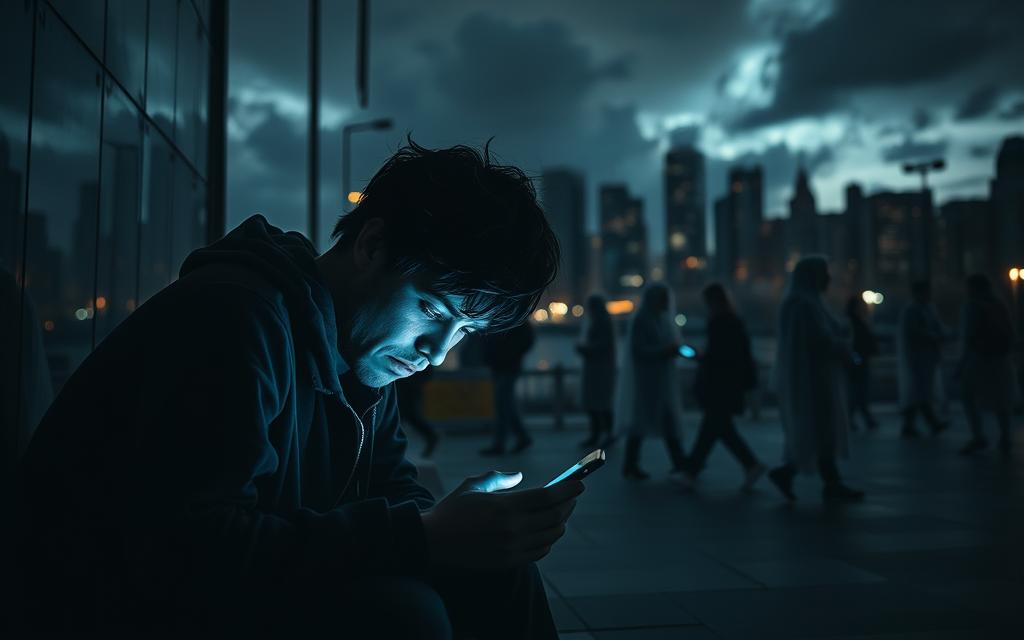
Our digital devices are always with us today. They make life easier, but research shows they harm our health.
Medical News Today says too much screen time can cause health problems. These technology side effects include mental and physical issues that affect many people.
Studies link too much digital use to anxiety, depression, and sleep problems. The way our devices are made adds to these digital downsides that hurt us all.
This article looks into the harm technology causes. We see how being always connected affects our mental and physical health.
The Psychological Impact of Constant Connectivity
Modern technology keeps us always connected, leading to mental health issues. Our devices are now part of us, changing how we think. This constant availability is a big change for our minds.
Increased Anxiety and Stress Levels
Being always connected is stressful. People feel anxious when they can’t use their devices. This is called nomophobia.
This stress makes our cortisol levels go up and disrupts our sleep. The fear of missing out (FOMO) makes us check our devices a lot. This cycle of anxiety is hard to break.
Using digital devices a lot can hurt how we manage our emotions. A study found that heavy tech users have lower emotional intelligence. This is a big concern for our mental health.
Related Posts:
- Does Technology Benefit Society The Impact on Modern Life

- How Technology Affects Our Daily Lives A Comprehensive Essay

- How Technology Affects Family Communication Digital…

- How Science and Technology Affect Our Lives…

- How Technology Changed Communication From Letters to…

- The Most Important Technologies Shaping Our World

The Comparison Trap on Social Media
Social media makes us compare ourselves to others. We see only the best parts of their lives. This is not real.
This comparison affects our mental health. Seeing perfect lives online makes us feel bad about our own. It’s a big source of stress.
Instagram and Facebook’s Role in Self-Esteem Issues
Instagram and Facebook focus on looks, making us feel bad about ourselves. The images we see are not real. They show beauty in a way that’s not achievable.
A study found that Instagram can make us unhappy with our bodies. It’s hard for young people to deal with these unrealistic beauty standards.
Facebook also makes us compare our lives to others. Seeing only the best parts of their lives makes us feel less satisfied. It’s a big problem for our self-esteem.
TikTok’s Impact on Attention Spans and Body Image
TikTok changes how we think and focus. Its fast-paced videos make us used to quick changes. This can make it hard to focus for long.
This quick change is called attentional fragmentation. Our brains get used to it, but it’s not good for our focus.
TikTok also affects how we see ourselves. Its videos and trends often show the same beauty standards. This can make us feel bad about our bodies.
Young people are most affected by TikTok’s influence. They feel anxious about their bodies because of what they see online. Seeing perfect bodies all the time makes them compare themselves a lot.
How Technology Is Bad For Our Physical Health
Our screen-dominated lives have a big impact on our bodies. We spend hours on devices, and our bodies suffer. This section looks at how technology use affects our health.
Sedentary Lifestyle Consequences
Using devices for too long makes us sit a lot. This is bad for our health. Office workers sit for over nine hours a day.
This sitting can lead to weight gain and obesity. Our bodies weren’t made for sitting so long.
Our hearts and metabolism also suffer. Studies show sitting too much can cause heart disease and metabolic disorders. It’s not good for our bodies.
Muscles and bones can get hurt from using devices. “Text neck” is a common problem. It causes pain from looking down at screens. Bad posture can lead to spinal issues and chronic pain.
Digital Eye Strain and Vision Problems
Looking at screens for a long time hurts our eyes. It can cause dry eyes, headaches, and blurred vision. About 50-90% of computer users experience these problems.

People who use devices a lot often feel eye discomfort. Optometrists see more cases of vision problems from technology. Changing how we set up our workspace can help.
Blue light exposure from smartphones and computers
Devices give off blue light that messes with our sleep. This light affects how we make melatonin, making it hard to sleep. Using devices in the evening is worst for sleep.
“The pervasive nature of blue light exposure from devices represents a relatively new environmental factor that our eyes and brains are struggling to adapt to.”
Blue light affects different age groups in different ways. Here’s a table showing the effects:
| Age Group | Primary Concern | Recommended Daily Limit |
|---|---|---|
| Children (under 12) | Sleep disruption | 1 hour recreational use |
| Teens (13-18) | Eye development | 2 hours recreational use |
| Adults (19-60) | Digital eye strain | Take breaks every 20 minutes |
| Seniors (60+) | Macular health | Use blue light filters |
Increased myopia rates among young users
There’s a big rise in nearsightedness among kids and teens. Screen time is linked to myopia at younger ages. Researchers say it’s because of too much near-work and less outdoor time.
Young eyes are very sensitive to vision problems. As devices get more common in school and fun, the problem gets worse. It’s important to balance device use and outdoor time to protect eyes.
Parents and teachers should make sure kids take breaks and play outside. This can help prevent vision problems in young people.
The Erosion of Privacy in the Digital Age
Digital technology has changed how we see privacy. Now, our personal info is collected, analysed, and used for profit. This is a big change from when our info was mostly private.
This data privacy erosion is a big worry. Big companies make money from our data, often without telling us or asking us to agree.
Data Collection Practices of Major Tech Companies
Today, tech companies collect a lot of our data. They track what we search for, where we go, and what we say. This info helps create detailed profiles of us.
Google’s data harvesting through search and Android
Google is at the heart of a huge data collection effort. They use Android and search to track what we do online.
They look at our search history, YouTube watching, where we go, and what apps we use. This helps them make ads that are just for us. But it also means we lose a lot of privacy.
Facebook’s Cambridge Analytica scandal and beyond
The Facebook-Cambridge Analytica scandal showed how bad things can get. Millions of people’s data was taken without their permission. It was used for political ads.
This data helped make ads that were very personal. It showed how data privacy erosion can affect democracy by spreading false information.
Surveillance Capitalism and Its Implications
The way companies collect data is called surveillance capitalism. They see our lives as something to use for their own gain.
Surveillance capitalism means companies know more about us than we do about ourselves. This lets them change what we see and do online.
This is not just about money. It’s about our freedom and democracy. When our actions can be predicted, our freedom is at risk.
| Company | Data Collection Method | Primary Use | Privacy Concerns |
|---|---|---|---|
| Search history, Android usage, location tracking | Targeted advertising, service improvement | Comprehensive personal profiling, constant monitoring | |
| Facebook/Meta | Social interactions, content engagement, metadata analysis | Behaviour prediction, advertising optimisation | Psychological manipulation, political influencing |
| Other Major Platforms | Purchase history, browsing patterns, device information | Consumer trend analysis, personalised experiences | Data breach risks, unauthorised third-party sharing |
The way tech companies collect data is a big problem. It’s not just about privacy. It also makes us vulnerable to hackers.
The world of surveillance capitalism has made privacy a luxury. We need to understand this to take back control of our online lives.
Technology’s Impact on Sleep Patterns
Our nightly rest has become a casualty of our digital devotion. The devices we love to use are now harming our sleep quality and duration. This technology sleep disruption is a growing concern, with studies showing it can lead to poorer health.
Blue Light Disruption of Circadian Rhythms
Blue light from smartphones, tablets, and laptops is the main culprit. It tricks our brains into thinking it’s daytime.
This light stops our brains from making melatonin, the hormone that helps us sleep. Without enough melatonin, falling asleep is harder.
When we can’t make enough melatonin, we have trouble sleeping. Our body’s signal to relax is disrupted. This leads to later bedtimes and poor sleep quality.
The Always-On Culture and Sleep Deprivation
Our behaviour also plays a big role. The need to stay connected all the time is bad for sleep. It brings work and social pressures into our bedrooms.
Checking emails or scrolling through social media before bed keeps us awake. It stops us from slowing down and getting into deep sleep.
Smartphone notifications and sleep interruption
Notifications at night are very disruptive. Even if we fall asleep, a notification can wake us up.
This breaks up our sleep, making us feel tired and unfocused the next day. Studies show that having a phone by the bed is linked to poor sleep.
Keeping a phone by the bed makes our brains stay alert. It stops us from fully relaxing and switching off.
Social Isolation Despite Digital Connection
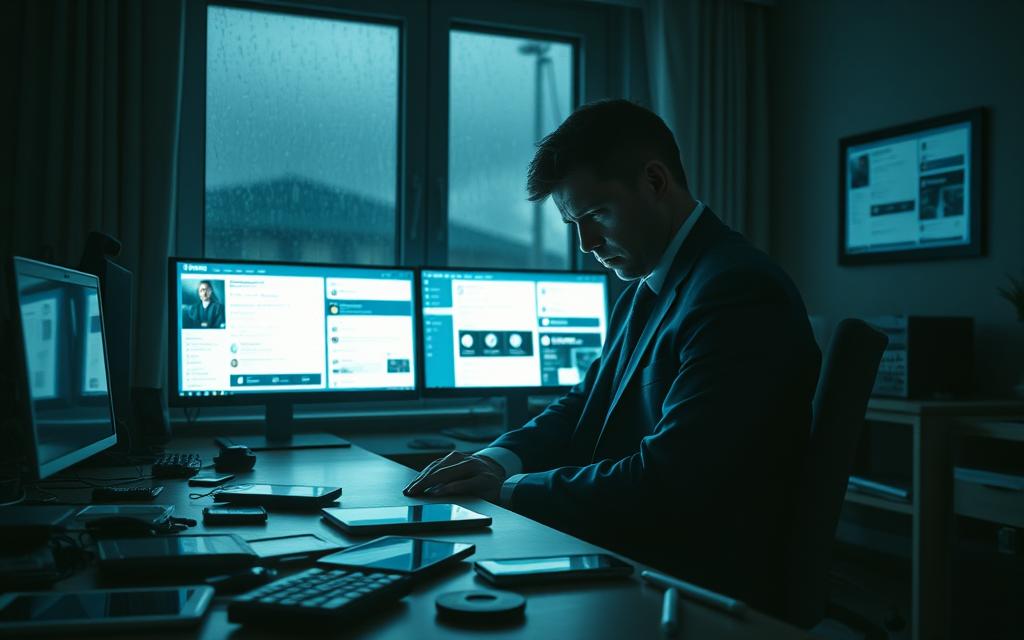
Technology is meant to connect us more than ever before. Yet, many feel more alone than ever, even with lots of online friends. This is a big problem with technology.
The Paradox of Social Media Loneliness
Social media makes us think we have friends, but it’s not real. We get lots of followers but feel truly alone. This is because online friends can’t replace real ones.
Studies show that too much social media makes us feel isolated. Seeing others’ perfect lives online can make us unhappy. This is true for everyone, but teens and young adults are hit the hardest.
“The more time people spend on social media, the more likely they are to perceive social isolation.”
Decline in Face-to-Face Communication Skills
Using digital tools to talk has changed how we interact. It makes us less good at talking face-to-face. Now, many struggle with simple conversation skills.
Not using our bodies to communicate is a big problem. We forget how to read body language and show emotions. This hurts our work and personal lives.
Impact on Children’s Social Development
Kids who use screens a lot have trouble with social skills. They don’t get to practice talking and interacting like they should. This can hurt their emotional intelligence.
It affects their ability to:
- Read facial expressions and body language
- Feel empathy through real emotional exchanges
- Solve conflicts in real time
- Build deep, trusting relationships
| Age Group | Screen Time Hours | Reported Loneliness | Social Skills Assessment |
|---|---|---|---|
| 8-12 years | 4.5 hours daily | 38% report frequent loneliness | 23% below expected development |
| 13-17 years | 7.5 hours daily | 45% report frequent loneliness | 31% below expected development |
| 18-22 years | 6.2 hours daily | 41% report frequent loneliness | 27% below expected development |
The data shows a link between more screen time and feeling lonely and struggling with social skills. We need to find a balance between digital and real-life interactions for everyone.
Cognitive Effects and Attention Span Reduction
Our digital devices are changing how we think and communicate. Studies show they might be making our attention span shorter across all ages.
The TikTok Effect on Concentration
TikTok’s algorithm gives us quick, fun content. This makes our brains get used to fast rewards.
A study in Dialogues in Clinical Neuroscience found TikTok users have trouble focusing on long tasks. The endless scroll makes us keep watching without breaks.
Medical News Today says kids who use TikTok a lot have trouble focusing in school. This shows a big change in how young people learn.
Multitasking Myths and Productivity Loss
Many think they can do many things at once with digital devices. But science says this isn’t true. It actually makes us less productive.
Our brains don’t really multitask. They switch tasks fast, which slows us down. Each switch uses up mental energy and makes mistakes more likely.
Trying to do many things at once with technology can cut productivity by up to 40%. It wears out our brains and makes our work worse.
Smartphone interruptions during work and study
Smartphone notifications keep interrupting us. Even ignoring them, having a phone nearby uses up our brain power.
It takes about 23 minutes to get back into deep focus after a digital break. These constant breaks make it hard to stay focused all day.
The table below shows how different interruptions affect our brains:
| Interruption Type | Average Recovery Time | Impact on Error Rate | Productivity Loss |
|---|---|---|---|
| Smartphone Notification | 5-8 minutes | +15% | 12-15% |
| Social Media Check | 10-15 minutes | +22% | 20-25% |
| Email Response | 8-12 minutes | +18% | 15-20% |
| Multitasking Between Tasks | 15-23 minutes | +30% | 35-40% |
These findings show how digital distractions cost us a lot. They affect our learning and work performance.
Knowing these effects helps us use technology better. Being aware of how it affects our brains helps us make better choices.
Cybersecurity Threats and Digital Vulnerability
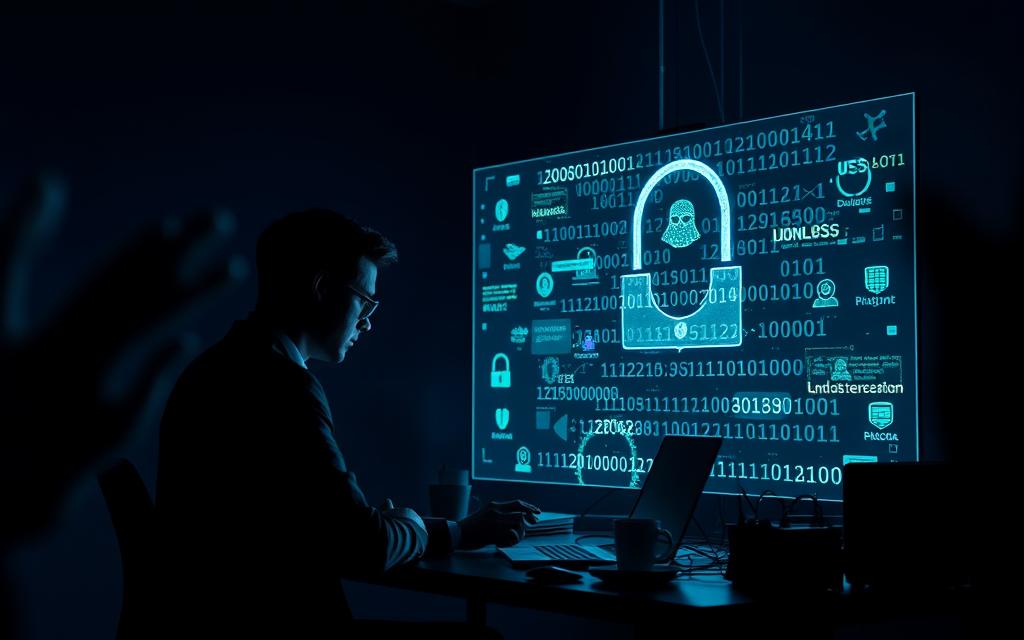
Our digital lives face risks that go beyond just mental health issues. The ease of online services brings big online vulnerability risks. Criminals take advantage of these risks.
Financial institutions and security agencies worldwide see more digital crimes. The National Cyber Threat Assessment 2025-2026 shows how criminals use smart methods to target people and businesses.
Rise of Identity Theft and Financial Fraud
Identity theft is a fast-growing crime in the digital world. Criminals use many ways to steal personal info:
- Phishing emails that look real
- Data breaches that expose millions of accounts
- Social engineering tricks that play on trust
- Malware that captures what you type
After identity theft, financial fraud often happens. Victims find out about money stolen or new accounts opened in their names. Fixing this can take months or years, causing stress and financial loss.
| Type of Fraud | Average Financial Loss | Recovery Time |
|---|---|---|
| Credit Card Fraud | $1,000-5,000 | 2-4 weeks |
| Account Takeover | $5,000-15,000 | 3-6 months |
| Identity Theft | $10,000-25,000+ | 6-12+ months |
Mental Health Impact of Cyberbullying
Cyberbullying is a big cyberbullying mental health problem. It mainly affects young people but also adults. Online bullying can follow victims everywhere, thanks to mobile devices.
Victims often feel:
- Anxiety and depression
- Wanting to stay away from others
- Doing poorly in school or work
- In extreme cases, they might even think about suicide
Because digital communication is always on, there’s no escape from bullying. This constant exposure makes the mental harm worse than offline bullying.
Anonymous platforms like 4chan and their consequences
Places like 4chan have little accountability for bad behaviour. They often become places for bullying and harmful ideas.
Without knowing who’s behind posts, people can:
- Start campaigns to bully others
- Share extremist views
- Share private photos without consent
- Plan real-life bullying based on online actions
Studies show that being anonymous online can make people act worse. The distance and anonymity reduce empathy and encourage actions they wouldn’t do face-to-face.
To fight cybersecurity threats identity theft, we need tech solutions and changes in how we act online. Learning about digital safety, setting strong privacy settings, and thinking critically about online interactions can help reduce online vulnerability.
Knowing about these risks helps us make better choices online. Being aware is the first step to safer online spaces for everyone.
Environmental Costs of Technological Progress
Every day, we use devices that have a hidden environmental cost. The fast pace of new technology creates big problems. These include electronic waste and the energy needed to power our devices.

E-Waste Generation and Disposal Challenges
When we upgrade our devices, we create a lot of waste. Old phones, laptops, and tablets have harmful materials like lead and mercury. If not disposed of properly, these can pollute our soil and water.
Even though more people know about recycling, it’s not happening enough. Many just throw away old devices or keep them in storage. The world’s e-waste problem keeps getting worse with each new gadget.
Places with weak environmental laws often get most of this waste. Workers there face serious health risks from toxic materials.
Energy Consumption of Data Centres
Our love for being online uses a lot of energy. Big server farms run all the time to keep our data safe and accessible. They use as much power as a small country.
The systems that keep these servers cool also use a lot of energy. This heat needs to be managed constantly. Even with efforts to be more efficient, the demand keeps growing.
These centres usually use non-renewable energy, despite promises to change. The carbon footprint of our online activities is huge. This is a big environmental problem.
Amazon Web Services and Google Cloud Environmental Impact
Big names like Amazon Web Services and Google Cloud have huge data centre networks. They aim to use more renewable energy. But their size means even small inefficiencies have big environmental effects.
These companies use new cooling methods and choose locations wisely. They pick places that are cooler and closer to renewable energy. But, the need for more storage and processing keeps growing.
Their green policies set standards for the whole industry. Their investments in clean energy help reduce their impact. But they need to be more open about how they use energy.
Managing the environmental impact of data centres is tough. They face challenges like:
- Keeping performance high while using less energy
- Switching to renewable energy on a big scale
- Finding better cooling methods
- Being more open about their environmental efforts
Economic Disruption and Job Displacement
Technological advancements change the economy and jobs worldwide. These changes bring both good and bad news for workers in many fields.

Automation’s Threat to Traditional Employment
Artificial intelligence and robotics are taking over jobs in many areas. This technology economic disruption is a big worry for jobs that need repetitive tasks or follow set patterns.
Many jobs are at risk as machines get better and cheaper. The automation job displacement issue hits both blue-collar and white-collar jobs hard.
Studies show that about 30% of tasks in 60% of jobs could be automated now. This means a huge need for workers to learn new skills.
| Sector | Automation Risk Level | Projected Job Losses by 2030 |
|---|---|---|
| Manufacturing | High | 20-25% |
| Retail | Medium-High | 15-20% |
| Transportation | High | 10-15% |
| Administrative | Medium | 5-10% |
The Gig Economy’s Precarious Nature
Digital platforms have brought new job models with short-term jobs. This gig economy precarity offers flexibility but lacks stability.
Workers in this field often have little job security and unpredictable pay. They face challenges in planning their finances and getting benefits.
Without sick pay, holiday pay, and pension contributions, workers face big hurdles. This model puts the economic risk on workers, not companies.
Uber and Deliveroo’s Impact on Workers’ Rights
Platform companies have faced legal battles over worker rights. Courts have questioned if gig workers should be seen as employees.
These companies say their workers are independent contractors, not employees. This avoids giving them minimum wage and benefits.
Recent court decisions are starting to challenge this. They say platform workers should have basic protections. The legal fights show the struggle between new ideas and protecting workers.
The gig economy precarity mainly affects those who rely on platform work. It creates unstable work conditions with little protection against unfair treatment.
Addiction and Behavioural Dependencies
Technology has led to new types of addiction that doctors now see more often. These addictions show up as compulsive use that messes up daily life and health.
Smartphone and Social Media Addiction
Smartphone addiction is a big problem today. People often can’t stop using their phones, even when it hurts their work or personal life.
Social media addiction is another issue. It’s about being too caught up in sites like Instagram and Facebook. People use these sites to feel better or escape reality, leading to a cycle of emotional dependence.
A study in Dialogues in Clinical Neuroscience found that internet addiction is like substance abuse. It includes withdrawal, needing more to feel the same, and relapsing.
Gaming Disorder Recognised by WHO
The World Health Organisation has officially called gaming disorder a mental health issue. This shows how serious it is for people and their families.
To be diagnosed, you must have trouble controlling gaming, prefer gaming over other things, and keep gaming despite problems. This must go on for at least a year.
Fortnite and other games designed for retention
Games like Fortnite use tricks to keep players hooked. They use rewards that are unpredictable to keep players playing.
Things like battle passes and seasonal content make players feel like they must keep playing. Updates and special events keep things fresh and exciting.
These tactics can lead to problems, mainly for young players. They might not know how to stop playing because it’s so engaging.
| Addiction Type | Primary Characteristics | Common Platforms | WHO Recognition |
|---|---|---|---|
| Smartphone Addiction | Compulsive checking, notification anxiety | Mobile devices | Not formally recognised |
| Social Media Dependency | Comparison anxiety, validation seeking | Instagram, Facebook, TikTok | Not formally recognised |
| Gaming Disorder | Loss of control, priority over other interests | Fortnite, mobile games, MMORPGs | Formally recognised (2019) |
Knowing about these addictions helps us spot problems early. This way, we can manage our tech use before it gets worse.
Conclusion
Our look into technology’s downsides shows a mix of mental, physical, and social problems. These include more anxiety and less privacy, which we must tackle.
The UA Grantham study shows that technology’s worth depends on how we use it. This summary says we can’t just give up on tech. Instead, we need to use it wisely.
Starting to manage tech use means setting personal limits. Having tech-free times, cutting down on social media, and focusing on real-life interactions can help a lot.
Digital health needs us to take care and for tech companies to act responsibly. Supporting clear data rules and designs that put people first is key to a better digital world.
By facing these issues and using smart strategies, we can enjoy tech’s good sides. We can keep our well-being, relationships, and privacy safe in our digital lives.
FAQ
How does technology contribute to anxiety and stress?
Being always connected and the fear of missing out (FOMO) can make us anxious. Platforms like Facebook and Instagram add to this stress.
What is the comparison trap on social media?
Social media, like Instagram and Facebook, shows us perfect lives. This can make us feel bad about ourselves and our bodies.
How does technology affect physical health?
Using devices too much makes us sit a lot. This can lead to obesity and heart problems. It also causes eye strain and vision issues.
What is digital eye strain and what causes it?
Digital eye strain, or computer vision syndrome, includes symptoms like dry eyes and headaches. It’s caused by looking at screens for too long and blue light from devices.
How do major tech companies collect and use personal data?
Companies like Google collect our data to make ads. The Facebook Cambridge Analytica scandal showed how this data can be misused.
What is surveillance capitalism?
Surveillance capitalism is when companies collect a lot of personal data for profit. This raises privacy and freedom concerns.
How does blue light from screens disrupt sleep?
Blue light from devices stops our bodies from making melatonin. This makes it hard to sleep well, leading to tiredness.
What is the “always-on” culture and how does it affect sleep?
The “always-on” culture means we’re always connected. This can break up our sleep, making it poorer quality.
Why can social media lead to feelings of loneliness?
Social media can make us feel lonely, even though we’re connected online. It replaces real-life interactions.
How has technology impacted interpersonal communication skills?
Not talking face-to-face can make it hard to read people and feel empathy. This affects how we build relationships.
What is “The TikTok Effect” on attention spans?
“The TikTok Effect” means we get used to quick, short content. This makes it hard to focus on things that take longer.
Is multitasking with technology effective?
No, switching between tasks and notifications can make us less productive. It leads to mistakes and mental tiredness.
What are the risks of identity theft and financial fraud online?
Online, data breaches and scams can steal our identities and money. This is a big safety risk.
How does cyberbullying affect mental health?
Cyberbullying can cause serious mental health issues, like depression and even suicide. Places like 4chan can make it worse.
What is e-waste and why is it a problem?
E-waste is old electronics with toxic materials. It’s hard to recycle safely, posing a big environmental problem.
How energy-intensive are data centres?
Data centres, like those by Amazon and Google, use a lot of energy. This contributes to a lot of carbon emissions.
How does automation threaten traditional employment?
Automation and AI can replace many jobs. This changes the job market and creates uncertainty for workers.
What are the drawbacks of the gig economy?
The gig economy, like Uber and Deliveroo, offers flexibility but lacks job security. It also doesn’t provide benefits or workers’ rights.
What characterises smartphone and social media addiction?
Addiction means we can’t stop using devices, even when it’s bad for us. It’s about being obsessed and using devices to feel better.
What is Gaming Disorder and how is it recognised?
Gaming Disorder is a mental health issue, recognised by the World Health Organisation. It’s about losing control over gaming and ignoring its negative effects. Games like Fortnite are designed to keep us playing, which can be addictive.