


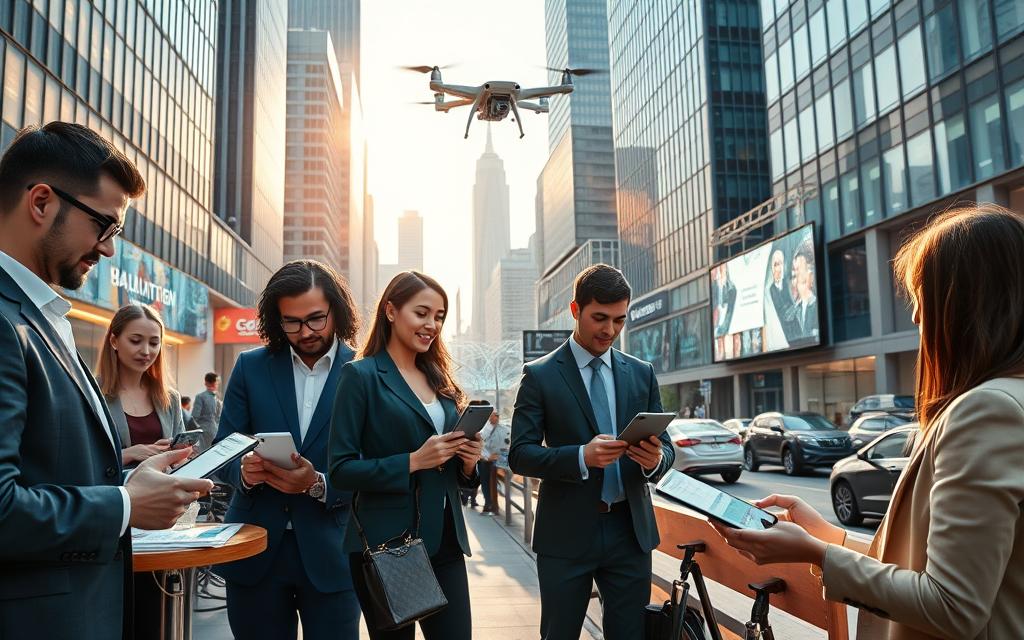
Our lives today are deeply connected to technology. From waking up to going to bed, gadgets and new ideas change how we live.
This close link shows our amazing progress from simple tools to complex digital systems. The digital transformation we see today is part of a long history of innovation. It started with ancient discoveries.
This essay looks at how technology affects us today. We’ll see both the good and the bad sides of new technology in our lives.
We’ll talk about how tech changes how we communicate, work, learn, and stay healthy. We’ll also look at how it affects our social lives and personal happiness. Our aim is to give a fair view of this complex topic.
The Pervasive Presence of Digital Technology in Modern Society
Digital technology has become a big part of our lives, making the world more connected than ever before. This change is huge, affecting how we work, learn, talk to each other, and even think.
From Analog to Digital: A Historical Perspective
The move from analog to digital has changed how we use technology. The Industrial Revolution made machines do physical work. But the Digital Revolution has made information the main thing we deal with today.
Old computers were huge and needed experts to use. But in the 1970s, microprocessors made them smaller and easier to use. By the 1990s, computers were in every home, making us always connected.
The internet became available for everyone in the mid-1990s. It started as a network for the military and schools. Now, it’s the main way we talk to each other. This led to new tech like mobile phones, cloud computing, and AI.
Related Posts:
- Does Technology Benefit Society The Impact on Modern Life

- How Science and Technology Affect Our Lives…

- How Technology Affects Family Communication Digital…

- How Technology Changed Communication From Letters to…

- How Technology Is Bad For Us The Negative Side Effects
- What Is a Bachelor of Science in Information…

Quantifying Technology’s Daily Penetration
Looking at how much we use digital tech shows how big a part it plays in our lives. We start and end our day with tech, from phone alarms to sleep apps.
Studies show how much we use tech:
| Digital Technology | Penetration Rate | Average Daily Usage | Primary Age Group |
|---|---|---|---|
| Smartphones | 85% of adults | 3.5 hours | 18-34 years |
| Internet Access | 93% of households | 6-7 hours | All demographics |
| Smart Home Devices | 42% of homes | Constant monitoring | 25-44 years |
| Wearable Technology | 21% of population | 24-hour tracking | 18-49 years |
This shows how tech is part of our daily lives. Workplaces use tech for remote work and flexible hours. Even kids learn tech skills fast, sometimes before reading.
Today, knowing how to use digital tech is as important as reading. This change shows how we’ve moved from old ways of getting information to new digital ones.
Being always connected by tech changes our lives a lot. This always-on world is different from before. It’s the base for looking at how tech affects our communication, work, and learning.
How Does Technology Affect Our Daily Lives: Communication Transformations
Digital innovations have changed how we connect, creating a global network for instant communication. This change affects our personal and work lives, bringing new opportunities and challenges in keeping relationships strong.

The Evolution of Personal Communication Methods
Waiting weeks for letters or expensive long-distance calls is now a thing of the past. Today, we have instant, always-on communication that connects us across the world.
Instant Messaging and Social Media Platforms
Apps like WhatsApp and Telegram have changed messaging, making it free and instant. They let us share photos, have group chats, and send voice messages, enriching our conversations.
Social media sites like Facebook, Instagram, and Twitter have also changed how we share and connect. They let us:
- Share photos and updates instantly
- Reconnect with old friends
- Build professional networks
- Stay updated on global events
These platforms mean we’re always just a few taps away from our friends. They’ve changed our expectations of quick responses and being available.
Video Conferencing Technologies
Video calling apps like Zoom and Microsoft Teams have made long-distance communication better. They’re key for staying in touch personally and working together, supporting remote work.
The table below shows how video conferencing features compare on popular platforms:
| Platform | Maximum Participants | Recording Feature | Screen Sharing | Free Tier Limitations |
|---|---|---|---|---|
| Zoom | 100 (free) | 40 minutes | Yes | 40-minute group meetings |
| Microsoft Teams | 300 | Unlimited | Yes | Requires Microsoft account |
| Google Meet | 100 | Available | Yes | 60-minute time limit |
| Skype | 50 | Yes | Yes | No time restrictions |
“Video technology has erased borders in communication, allowing face-to-face interaction regardless of physical location. This has been profoundly transformative for families separated by distance and businesses embracing remote work models.”
Changing Family Dynamics Through Digital Connection
Digital tools have deeply impacted family bonds, even when family members are far apart. They enable people to stay close despite distance for work or study.
Now, families enjoy regular video calls, shared photo albums, and group messaging. Grandparents watch their grandkids grow through weekly calls, and siblings separated by continents can join family celebrations virtually.
Yet, this digital connection brings new challenges. Families face:
- Struggling to balance screen time with real-life interaction
- Setting digital etiquette during family time
- Managing expectations of constant availability
- Keeping quality conversations amidst digital distractions
The technology that supports remote work and long-distance connections also requires new digital usage norms. While these tools help keep relationships strong, they can’t fully replace face-to-face interaction and shared experiences.
As one family therapist noted, “Digital tools are fantastic for maintaining connection, but we must remember they’re supplements to relationships, not replacements for genuine togetherness.”
Workplace Revolution: Technology’s Impact on Professional Lives
Technology has changed the workplace in big ways. It has changed where, when, and how we work. This has brought new chances and challenges for workers today.
The Rise of Remote and Flexible Working
Remote work is now common, not just a special perk. Thanks to tech, people can work from anywhere with internet. This helps with work-life balance and cuts down on travel time.
But, remote work also has its downsides. Some feel lonely and struggle to separate work from personal life. The gig economy has grown, giving flexible jobs but also making some jobs less secure.
Collaboration Tools: Microsoft Teams and Slack
Without tools like Microsoft Teams and Slack, remote work wouldn’t be possible. They help teams work together like they’re in the same office.
These platforms offer:
- Instant messaging for quick questions
- Video conferencing for face-to-face meetings
- File sharing and collaborative editing
- Integration with other business applications
These tools have changed how we communicate at work. They make working together easier but can also make us feel like we’re always on call.
Automation and Changing Job Requirements
Automation is changing what jobs need. AI and machine learning can do tasks that used to need humans. This change affects jobs in many fields.
Automation has both good and bad sides for jobs. Some jobs might disappear, but new ones will appear. Workers need to learn new skills to work with these new systems.
This change is like what’s happening in other areas, like online education. It helps people learn new things for the changing job market.
| Technology Impact | Positive Effects | Challenges | Future Outlook |
|---|---|---|---|
| Remote Work Tools | Flexibility, reduced overheads | Isolation, work-life balance | Hybrid models becoming standard |
| Automation Systems | Increased productivity | Job displacement concerns | New tech roles emerging |
| Collaboration Platforms | Global team coordination | Communication overload | AI-enhanced features developing |
| Skill Requirements | Career diversification | Continuous learning needed | Digital literacy becoming essential |
Workers need to keep learning to stay up-to-date. Being able to use new tech is as important as old job skills. This is the new normal in work today.
Educational Transformation Through Technological Integration
Technology has changed education a lot, making new ways to learn and showing big challenges in access. The digital classroom is more than just replacing books with tablets.
Digital Learning Platforms and Resources
Today’s tech has brought advanced learning systems. Tools like Canvas and Blackboard help organise lessons, talk to teachers, and track student progress.
Apps and digital books have made learning fun and interactive. They include videos, quizzes, and tools for working together.
- Embedded videos and animations
- Interactive quizzes and assessments
- Customisable learning pathways
- Real-time collaboration tools
Many schools are now using digital tools first. Some have systems that students will see throughout their education.
Massive Open Online Courses (MOOCs)
MOOCs are a big step forward in education. Sites like Coursera and edX let people learn from top universities for little or no cost.
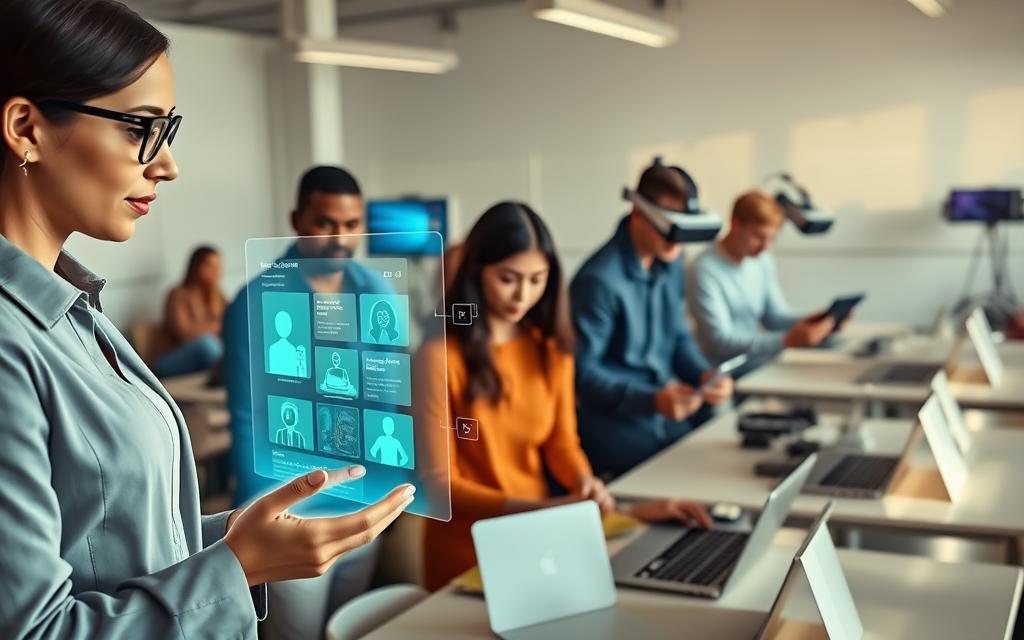
MOOCs make learning easy for anyone with internet. They let people learn at their own speed, helping those who work or have busy lives.
MOOCs also help in healthcare, keeping professionals up-to-date with new medical knowledge.
The Digital Divide in Educational Access
Even with new tech, not everyone can access digital learning. The digital divide is the gap between those with and without modern tech.
Money and where you live are big factors in this gap. Poor families often can’t afford:
- Reliable internet
- Modern computers
- Help with tech
- Knowing how to use digital tools
Where you live also matters. Rural areas often have bad internet, making learning hard for students there.
This gap is a problem. Tech offers great learning chances but also makes gaps between rich and poor students bigger.
Healthcare and Wellness: Technology’s Double-Edged Sword
Modern technology has changed healthcare for the better and worse. It brings both great opportunities and big worries that affect many people every day.
Telemedicine and Health Monitoring Devices
Telemedicine has changed how we see doctors, helping those in rural areas and those who can’t move easily. It cuts down on travel and waiting, keeping care quality high.
Health monitoring devices are also a big step forward. They let doctors track your health all the time, helping them make better diagnoses.
Wearable Technology: Fitbit and Apple Watch
Wearables like Fitbit and Apple Watch make tracking health easy for everyone. They watch your heart rate, sleep, and activity, helping you stay healthy.
But, there are doubts about how accurate and private this data is. These devices are meant to help, not replace, medical tools.
While these devices are handy, we must be careful. We should not always trust what they say, as it’s not always right.
Mental Health Impacts of Constant Connectivity
Even as we get better at tracking our bodies, being always connected can hurt our minds. It makes us feel like we must always be ready to respond.
Not getting enough sleep is a big problem. Looking at screens before bed messes with our sleep, and notifications can wake us up all night.
The social media impact on our mental health is also a big worry. Seeing perfect lives online can make us feel bad about ourselves.
| Technology Benefit | Potential Drawback | Balancing Strategy |
|---|---|---|
| Instant health data access | Data accuracy concerns | Professional verification |
| Remote consultations | Limited physical examination | Hybrid care models |
| Health trend tracking | Privacy risks | Data encryption |
| Community support | Comparison anxiety | Mindful usage |
Digital addiction is another big worry. The way social media and games work can make us use technology too much.
But, technology also helps with mental health. There are apps for meditation, online therapy, and digital support groups for those who need help.
Finding a balance is important. Setting limits, using technology mindfully, and taking breaks can help avoid the bad effects while keeping the good.
Social Interactions and Community Building in the Digital Age
Digital technology has changed how we connect and form communities. It’s not just about talking online. It’s about creating new social worlds that mix the digital and real.
The Transformation of Social Spaces
Now, we have both old and new places to meet. Community centres and online spaces let us stay connected, no matter where we are.
Social platforms have become like virtual town squares. They let us share and talk instantly, no matter where we are in the world.
Social Media Platforms: Facebook, Instagram, Twitter
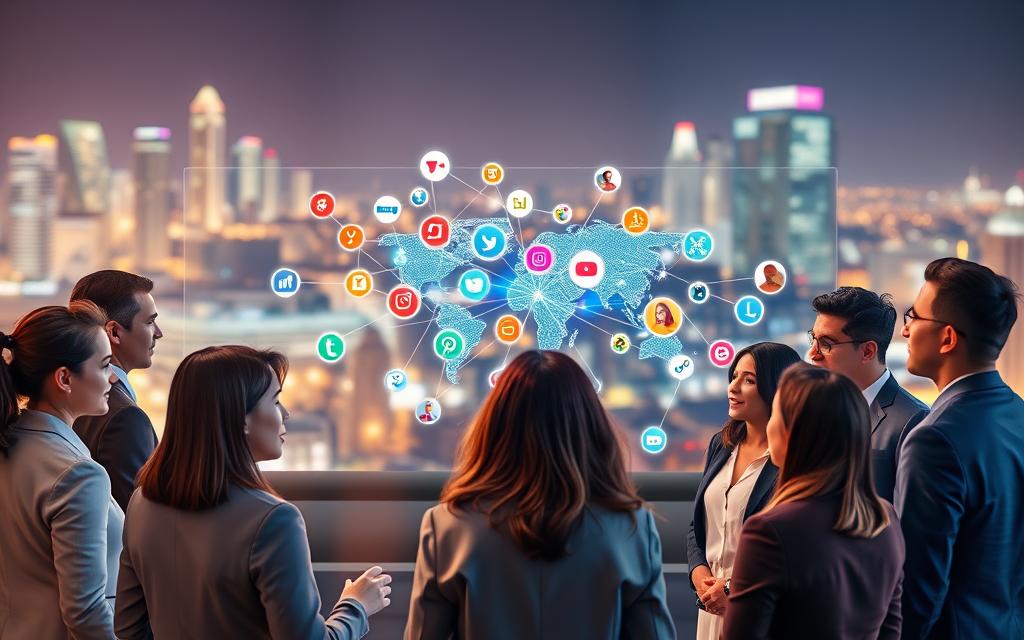
Facebook is a big social hub for friends and family. Instagram is all about sharing photos and videos. Twitter is for quick chats about what’s happening now.
These sites have changed how we share our lives and stay updated. They help us keep in touch, even when we’re far apart.
Online Communities Versus Physical Gatherings
Digital communities are based on shared interests, not where you live. This means people with special hobbies can meet others all over the world.
Meeting in person gives us a deeper connection. It’s about feeling and seeing each other, not just typing.
Online groups are great for those who can’t get out easily. They let us stay connected without worrying about time zones or travel.
The table below shows how online and in-person communities differ:
| Aspect | Online Communities | Physical Gatherings |
|---|---|---|
| Accessibility | 24/7 global access | Location-dependent |
| Interaction depth | Text and media-based | Multi-sensory experience |
| Community formation | Interest-based connections | Geographic proximity |
| Relationship building | Gradual development | Immediate personal connection |
Social media has opened up new ways to organise and act politically. It lets us share news and join forces quickly, breaking down old barriers.
These platforms help start grassroots movements and get people involved in civic issues. They give a voice to those who might not be heard by traditional media.
Now, even online shopping sites have social features. You can get recommendations and read reviews from others.
This mix of social and shopping online shows how digital interactions keep growing. It’s not just about talking anymore.
While online connections are valuable, they’re not a full replacement for real-life interactions. The best social lives mix both for the best results.
Consumer Behaviour and Shopping Habit Evolutions
The digital revolution has changed how we shop and interact with brands. Now, we shop online all the time, not just in stores. This has led to new ways of buying and interacting with brands that keep changing fast.
The E-commerce Revolution
Online shopping has become a must-have in just 20 years. We can now browse thousands of products from home and get them the next day. This has changed how we shop and what we buy.
Now, online stores compete with physical ones that are always open. We can compare prices easily, making us more aware of deals. This has made businesses work harder to be competitive in price and service.
Amazon’s rise has been a big change in retail. They offer convenience, a wide range of products, and fast delivery. This has set new standards for all retailers.
Amazon has also changed how we think about delivery and supply chains. Their Prime membership has made customers loyal, something other stores find hard to achieve.
As we’ve looked at how technology affects us, Amazon’s use of data has set the standard. Their recommendations have made us expect tailored shopping experiences everywhere.
Personalised Marketing and Data Collection
Marketing has become smarter with data analytics. Brands track our online activities to send us ads that match our interests. This makes ads more relevant but raises privacy concerns.
For us, this means ads that are more to our liking and fewer annoying ones. But, it also means our data is collected extensively. The ethics of this are a topic of ongoing debate.
This approach has also changed digital entertainment and how we watch media. Streaming services use similar tech to suggest shows, blurring the line between shopping and leisure.
As tech keeps advancing, so will our shopping and consumer habits. The challenge is to find a balance between convenience, personalisation, and privacy in this new world.
Entertainment and Leisure: The Digital Consumption Shift
The digital revolution has changed how we enjoy entertainment and leisure. We no longer plan our evenings around TV or video stores. Now, we have instant access to lots of content through streaming services and digital experiences.
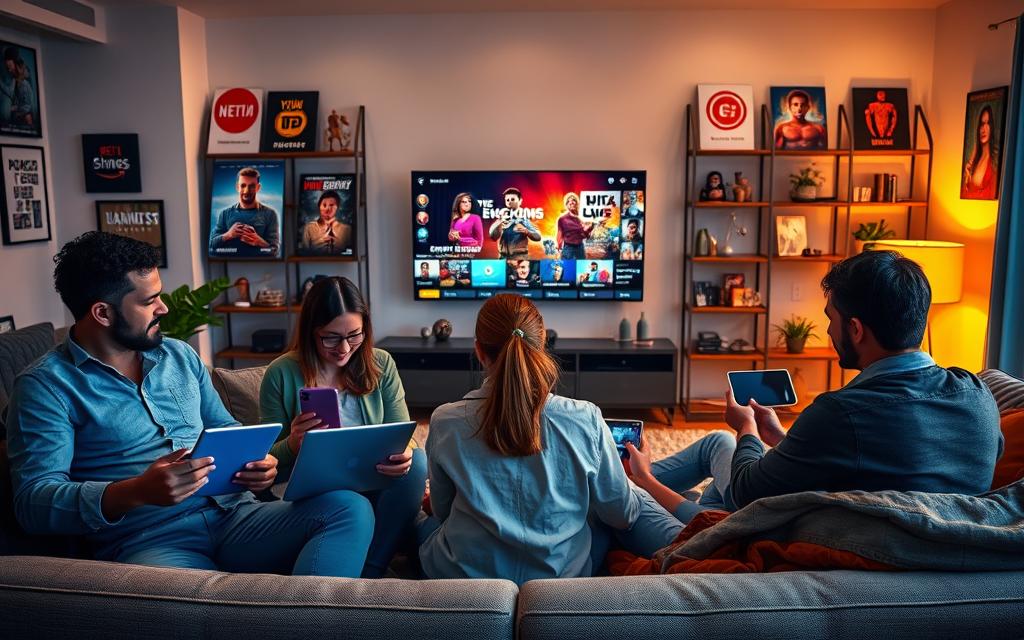
Streaming Services: Netflix, Spotify, and YouTube
Streaming platforms have changed how we watch and listen to media. Netflix has made binge-watching popular, where we watch whole series in one go. This has changed how stories are told and how we experience them.
Music has also changed a lot. Spotify’s recommendations help us find new artists. YouTube lets anyone create content for a global audience. These platforms have made it easier for new creators to succeed.
Now, entertainment is more personal. Algorithms suggest content based on what we like. This personal touch is also seen in music, where services create playlists just for us.
Gaming Culture and Virtual Experiences
Video games have become more than just fun. They are virtual places where we make friends and join communities. Games like Fortnite and Minecraft are like digital playgrounds.
Esports has become a big deal, with tournaments that draw big crowds. It has created jobs in gaming, streaming, and content creation. These jobs didn’t exist before.
Virtual and augmented reality are taking entertainment to new levels. VR takes us into digital worlds, while AR adds digital elements to real life. These technologies are changing how we tell stories and experience entertainment.
The cognitive effects of digital entertainment are big. They offer lots of choices but also make it hard to focus and relax. The constant digital stimulation can affect how we process information and enjoy traditional activities.
Even traditional activities have changed. Family movie nights now involve choosing what to stream. Gaming connects friends worldwide. This digital shift has brought new ways to connect but also new challenges in balancing digital and physical leisure.
Cognitive and Psychological Effects of Constant Technology Use
Our use of digital devices has changed how we think and feel. Studies show big changes in how we handle information and focus. We also seek approval in a world where we’re always connected.

Attention Span Changes and Multitasking Realities
Digital worlds have changed our focus. Our attention span has dropped from 12 seconds to 8 seconds. This shows we’re used to quick info, not deep focus.
Multitasking is hard on our brains. Many think they can do many things at once. But, it’s really fast switching between tasks, making us tired and less efficient.
The costs of always switching tasks include:
- Less information kept in mind
- More mistakes made
- Tasks take longer to finish
- We feel more stressed
Stanford University found heavy multitaskers do worse on tasks that need focus. They struggle to ignore distractions and keep information in mind, unlike those who focus on one thing.
| Cognitive Aspect | Light Technology Users | Heavy Technology Users | Percentage Difference |
|---|---|---|---|
| Sustained Attention | 42 minutes | 23 minutes | -45% |
| Task Switching Efficiency | 87% accuracy | 63% accuracy | -28% |
| Information Retention | 76% recall | 54% recall | -29% |
| Mental Fatigue Recovery | 18 minutes | 32 minutes | +78% |
The Psychology of Social Media Validation
Social media uses tricks to keep us hooked. The likes and comments we get make us feel good, like rewards. This makes us want more, but it can harm our mental health.
Young people struggle with who they are online and in real life. The difference can make them feel bad about themselves. Seeing perfect lives online makes them anxious and depressed.
“The dopamine-driven feedback loops of social media have created the first communication system that operates at both social and neurological levels simultaneously.”
Getting likes on social media feels good, like money. This is why we keep checking our phones, even if it’s not good for us.
Privacy is a big issue with social media. We share personal stuff for likes, which can be risky. This is a big problem for our mental health.
These changes show we’re changing how we interact. Technology connects us, but knowing its effects helps us use it better.
Privacy and Security Considerations in a Connected World
Our world is more connected than ever, bringing both benefits and risks. Every time we use digital services, we share personal details. These details build a detailed picture of who we are and what we like.
Being always connected has its downsides. Many of us give up personal info for free services. This creates a world where our data is valuable.
Data Vulnerability in Everyday Applications
Apps we use every day collect a lot of our personal info. Our phones track our online habits and where we go. They keep records of what we do online.
Some apps ask for more info than they need. IoT devices often lack good security. Data breaches have exposed millions of people’s info. Even when apps seem closed, they can keep tracking us.
These issues are worse when we’re addicted to tech. The more we use it, the more we risk our privacy. Being connected means we have more to lose.
Digital Footprints and Personal Information Management
Every online action leaves a digital footprint. Unlike footprints in the real world, these stay forever. We often can’t control or even see them.
To manage our online presence, we need to be proactive:
- Check privacy settings often
- Share less personal info
- Use strong, unique passwords
- Choose privacy-focused browsers and search engines
- Be careful about which apps access our data
“Privacy is not an option, and it shouldn’t be the price we accept for just getting on the internet.”
Managing our online presence is key today. Employers, schools, and friends check our online history. The balance between convenience and privacy is a big challenge.
There are also bigger issues to think about. Data collection helps with surveillance, affecting our choices and even our social standing. Knowing how this works helps us make better choices online.
While we can’t be completely anonymous, we can protect our privacy. It’s about finding a balance between staying connected and staying safe. As tech changes, so must our approach to privacy.
Conclusion
Technology changes our world in big ways. It affects how we talk, work, learn, and play. The digital age brings both great chances and big challenges.
How we use technology shapes its impact. It’s not always good or bad. What we choose to do with it matters a lot.
Knowing how to use technology well is key. We need to use our devices and platforms wisely. Keeping our minds and personal info safe is very important.
Using technology in a balanced way helps us use its benefits. It keeps us connected and healthy. Good habits can make technology work for us, not against us.
Future tech should make our lives better. We need to keep talking about using technology the right way. Together, we can make sure technology improves our lives every day.
FAQ
How has technology transformed communication in daily life?
Technology has changed how we talk to each other. We now use digital platforms like WhatsApp and social media instead of letters and phones. This makes it easy to stay in touch and work together from anywhere.
But, it also makes it hard to focus and changes how families interact.
What impact has technology had on modern workplaces?
Technology has changed work a lot. It lets people work from home and use tools like Microsoft Teams. This has brought in new jobs but also made some old ones disappear.
Workers need to keep learning to keep up.
How does technology affect education and access to learning?
Technology has made learning easier to get. Sites like Canvas and MOOCs offer great courses. But, not everyone has access to these resources.
This creates a gap in education based on money and where you live.
What are the pros and cons of technology in healthcare and wellness?
Technology helps health care a lot. It lets doctors see patients online and track health with devices like Fitbit. But, it also raises privacy and accuracy concerns.
It can also lead to addiction and disrupt sleep.
How has technology altered social interactions and community building?
Technology has changed how we meet people. Sites like Facebook and Twitter help us connect with others. But, it’s not always the same as meeting in person.
It can make our connections feel less real.
In what ways has technology changed consumer behaviour and shopping habits?
Technology has made shopping online popular. Sites like Amazon offer convenience and fast delivery. But, it also means companies know a lot about us.
This raises big questions about privacy.
How has digital technology impacted entertainment and leisure activities?
Digital tech has changed how we watch movies and listen to music. Services like Netflix and Spotify let us watch and listen whenever we want. It’s also made gaming and virtual reality more popular.
This has changed how we spend our free time.
What are the cognitive and psychological effects of persistent technology use?
Using tech too much can hurt our brains. It can make us less focused and more tired. Social media can also make us feel bad about ourselves.
This is true, but more for young people.
What privacy and security issues arise from living in a connected world?
Being always connected makes us vulnerable. Our personal info is at risk from apps and devices. It’s important to protect our online lives.
This is because our digital footprints are permanent.
How does the historical evolution of technology influence its current role in society?
Technology has come a long way. From the Industrial Revolution to now, it has changed how we live and work. Today, it’s part of our daily lives.
This has made us always connected in a way we never were before.
