

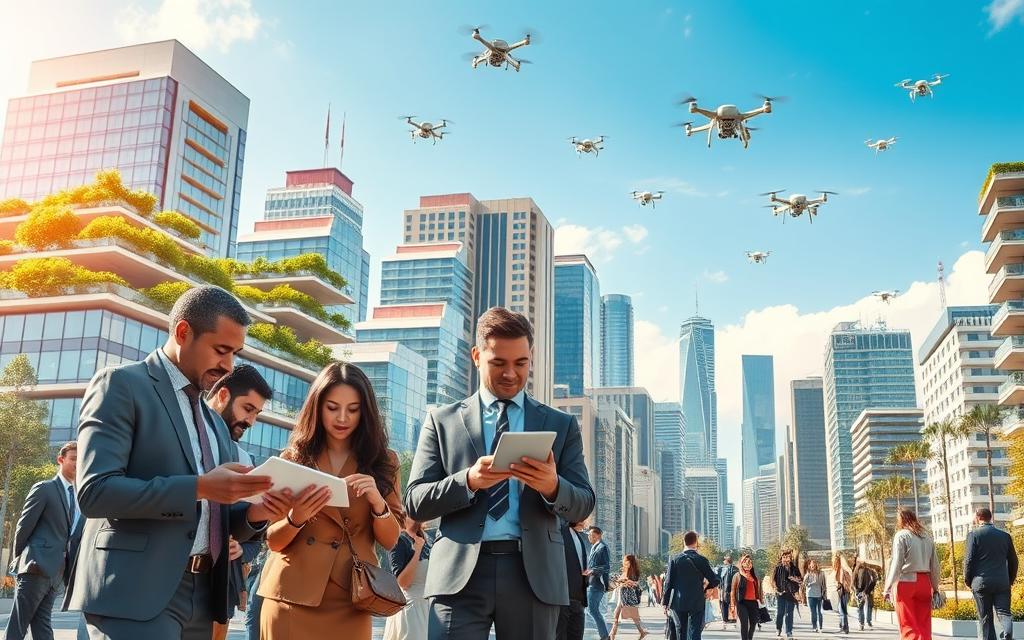
Our world is changing fast, thanks to new digital technologies. These changes are making a big difference in many areas. From better healthcare to improved education and how we talk to each other around the globe.
These technologies have the power to make our world a fairer and more peaceful place. They help solve big problems and help us reach important goals like the 17 Sustainable Development Objectives.
But, these changes also raise big questions about what’s right and wrong. Governments, companies, and people all have to think carefully about how to use these tools. They need to decide how to make the most of these changes in our society.
The choices we make now will shape our future. They will decide if these new technologies help us or bring new problems to face.
The Broad Impact of Scientific and Technological Progress
Digital technologies have spread fast around the world. They have changed societies quickly, unlike any other innovation. In just 20 years, they have reached half of the developing world’s people.
This change is one of the biggest in history. Digital tools have spread fast, unlike old innovations. They have brought both good and bad changes to people everywhere.
Understanding the Scope of Modern Innovations
Today’s modern innovations are more than just gadgets. They include artificial intelligence, cloud computing, and devices that talk to each other. This has changed our world fast, opening up new possibilities.
The internet has made things more inclusive. It has given more people access to information, education, and jobs. This is a big plus of today’s technology, but not everyone has it yet.
Related Posts:
- Does Technology Benefit Society The Impact on Modern Life

- How Technology Affects Our Daily Lives A Comprehensive Essay

- The Most Important Technologies Shaping Our World

- What Is a Bachelor of Science in Information…

- How Technology Affects Family Communication Digital…

- How Technology Changed Communication From Letters to…

From Industrialisation to the Digital Era: A Historical Perspective
The move from machines to digital networks is amazing. The Industrial Revolution brought power and mass production. The Digital Revolution has given us information and connection.
This shows how technology changes fast over time. The steam engine took centuries to change the world. But the internet did it in decades. This fast change brings both great chances and big challenges.
Knowing our history helps us understand today’s fast pace. We see patterns in how technology changes us. But the digital age’s speed is new and needs new ways to deal with it.
How Science and Technology Affect Our Lives in Communication and Connectivity
The digital revolution has changed how we connect with each other. It has made the world smaller, so distance doesn’t stop us from talking. Today, communication technology has changed our social lives and work, letting us talk instantly across the globe.
Evolution of Smartphones and Instant Messaging Platforms
Smartphones have come a long way from their early days. They’ve grown from simple phones to powerful computers in our hands. Instant messaging has made talking easy and quick.
Now, smartphones do everything from calls to social media. They’re key for both personal and work chats. New tech keeps making it easier to stay connected.
Effects on Social Interactions and Behaviour
Smartphones have changed how we interact. We can keep in touch with friends far away easily. Video calls and messages are now part of our daily lives.
But, being always connected has its downsides. Some feel overwhelmed by too much digital stuff. We’re learning to balance online and real-life talks.
Transformation of Corporate and Global Communication
Business has changed a lot too. Teams from all over work together in real-time now. Video calls and cloud services make remote work easy and effective.
This change has opened up the world for businesses. They can work 24/7, no matter where they are. It’s made starting global partnerships easier and boosted growth everywhere.
As one tech leader said:
“Being able to talk to anyone, anywhere, has changed business. It’s not just faster. It’s opened up new ways to work together that didn’t exist before.”
The communication revolution keeps moving forward. It brings new chances and challenges. As tech gets better, our ways of connecting will too.
Advancements in Healthcare and Medical Sciences
Modern medicine is changing fast, with new discoveries making big differences in health care. These changes in healthcare technology are improving patient results worldwide. Now, treatments that were once impossible are now possible and effective.
Breakthroughs in Diagnostic Tools and Treatment Methods
Today’s medicine has seen huge leaps in how we diagnose diseases. Artificial intelligence helps doctors spot problems more accurately than ever. These AI tools can see things that humans can’t, helping find diseases like cancer and brain disorders early.
New screening tools are making it easier to catch diseases early. These tools give detailed health checks that were not possible before. This has led to fewer deaths and longer lives for many people.

New treatments are also thanks to technology. Less invasive surgeries mean patients recover faster and face fewer risks. Robots help surgeons do complex operations with more precision.
“The use of artificial intelligence in diagnosis is the biggest leap in medicine, even bigger than the discovery of antibiotics.”
Genomics and Personalised Medicine: Shaping Future Health
Genetic research is changing how we understand health. The human genome map has led to treatments tailored to each person. This personalised medicine looks at each person’s genes to create the best treatment plan.
Genomic sequencing helps find the right medicine for each person before they start treatment. This reduces bad reactions and makes treatments work better. Patients get care plans that fit their genetic makeup, not just general plans.
Not everyone has access to these new medical technologies. While new treatments are coming out, making sure everyone can get them is a big challenge for health care systems around the world.
| Medical Innovation | Traditional Approach | Modern Advancement | Impact on Patient Outcomes |
|---|---|---|---|
| Cancer Detection | Physical examination only | AI-enhanced imaging screening | Earlier diagnosis, higher survival rates |
| Medication Prescription | Standard dosage for all patients | Genotype-guided dosing | Reduced side effects, improved efficacy |
| Surgical Procedures | Open surgery with large incisions | Robot-assisted minimally invasive | Faster recovery, less scarring |
| Chronic Disease Management | Reactive treatment of symptoms | Predictive monitoring with wearables | Proactive intervention, better control |
These big changes in medicine are changing what we expect from health care. The mix of technology and medicine is promising even more improvements in health care in the future.
Revolutionising Education Through Digital Solutions
The way we learn has changed a lot. Digital tools have opened up new chances for students and teachers. Now, learning knows no borders, making top education available everywhere.
The Growth of Online Learning and Educational Software
Online learning has changed education for the better. It lets students from anywhere join global classes. The internet is full of knowledge from top schools around the world.
Today’s educational software does more than show slides. It lets students try out real-life science, history, and math. Learning is fun and real with games and simulations.
Online learning shows how tech can make education fair for all. Students can study subjects not offered locally. They learn from experts all over the world.
Artificial Intelligence in Customising Learning Experiences
AI is changing how we learn. It makes learning plans just for you. AI finds out what you know and what you need to learn.
AI helps with homework and learning, like a teacher for everyone. It knows when you’re stuck and helps you understand better.
AI can talk to you like a real person. This makes learning feel more natural and less frustrating.
The future of AI in education looks even brighter. AI will guess what you need to learn before you even think of it. It will make learning fit your needs perfectly.
Economic Transformations Fueled by Technology
Technology is changing the world’s economy in big ways. It brings new chances and also new problems. The digital world has changed how businesses and jobs work.
This change affects all kinds of companies. Knowing about these changes helps us understand the new economic world.
The Rise of the Gig Economy and Remote Work Culture
Digital platforms have brought new work styles. These styles offer flexibility but also have their own challenges. The gig economy lets people work as freelancers or contractors online.
Remote work has grown thanks to better tech. Now, companies can hire people from all over the world without worrying about where they are.

- Flexible scheduling and location independence
- Project-based work instead of permanent jobs
- More chances to earn money from different places
- Less job security than traditional jobs
These new work styles give people freedom. But they also make us think about how to protect workers. The economic impact of technology on jobs is changing fast.
Automation, Robotics, and Their Influence on Job Markets
Automation is changing industries quickly. Robots and AI can do tasks that humans used to do.
Studies say about 800 million jobs could be lost to automation by 2030. This will hit many areas, from making things to office work.
But, technology also brings new jobs. For example, green tech could create 24 million jobs worldwide by 2030.
Key areas seeing big changes include:
- Manufacturing with advanced robots
- Customer service with chatbots and AI
- Data analysis with machine learning
- Logistics with automated warehouses
The job market is changing fast. Workers need to learn new skills to keep up. They must find ways to work with, not against, technology.
Economies need to find a balance between tech progress and keeping people happy. Good policies can help workers move to new jobs and make the most of automation.
Environmental Sustainability and Green Technologies
Technology is key to a sustainable future for our planet. It changes how we communicate, get healthcare, and manage money. Now, it also tackles environmental challenges. Green technology is our effort to save our world.
Renewable Energy Developments: Solar, Wind, and Beyond
Clean energy is a big win for us. Solar panels work better than before, making solar energy easier to get. Wind turbines now catch energy even when it’s calm.
There’s more than just solar and wind. Tidal power uses ocean currents, and geothermal energy uses the Earth’s heat. Bioenergy turns waste into power. These options help communities get clean energy that fits their needs.
| Energy Source | Current Adoption | Efficiency Rate | Projected Growth |
|---|---|---|---|
| Solar Power | Global | 22-24% | 15% annually |
| Wind Energy | Moderate-High | 35-50% | 12% annually |
| Hydroelectric | Established | 85-90% | 3% annually |
| Geothermal | Emerging | 10-20% | 8% annually |
Technological Approaches to Addressing Climate Change
Today’s tech helps us fight climate change. Satellites track deforestation and ice melt. Sensors check air and water quality everywhere.
Carbon capture tech is a big step forward. It pulls CO2 from the air or captures emissions. This reduces our carbon footprint.
Smart grids make energy use better. They balance supply and demand, cutting waste. This tech makes our energy system more efficient and green.
Green tech also helps farming. Precision farming uses sensors to save water and fertiliser. This boosts crop yields and cuts waste.
Thanks to tech, we have better water and sanitation. Modern filters give safe water worldwide. Waste tech turns sewage into water and energy. These advances meet our needs while protecting the planet.
Ethical Dilemmas and Social Challenges in a Tech-Driven World
Technological advancements bring great benefits but also raise complex ethical questions and social disparities. We face critical challenges that need careful thought and action.
Privacy, Data Security, and Surveillance Concerns
Modern tech collects a lot of personal info, raising big questions about data privacy and security. Many feel uneasy about how companies use their digital data.
Surveillance tech has grown smarter. Now, we have facial recognition, location tracking, and data mining. These can be misused, threatening our rights and freedoms.
Security breaches can leak sensitive info to bad actors. Recent big incidents show how vulnerable our digital world is. We must stay alert and improve our digital defences.
To tackle these issues, we need strong tech ethics rules. Companies must be open and accountable with our data. We should know how our data is used.
Bridging the Digital Divide for Equitable Access
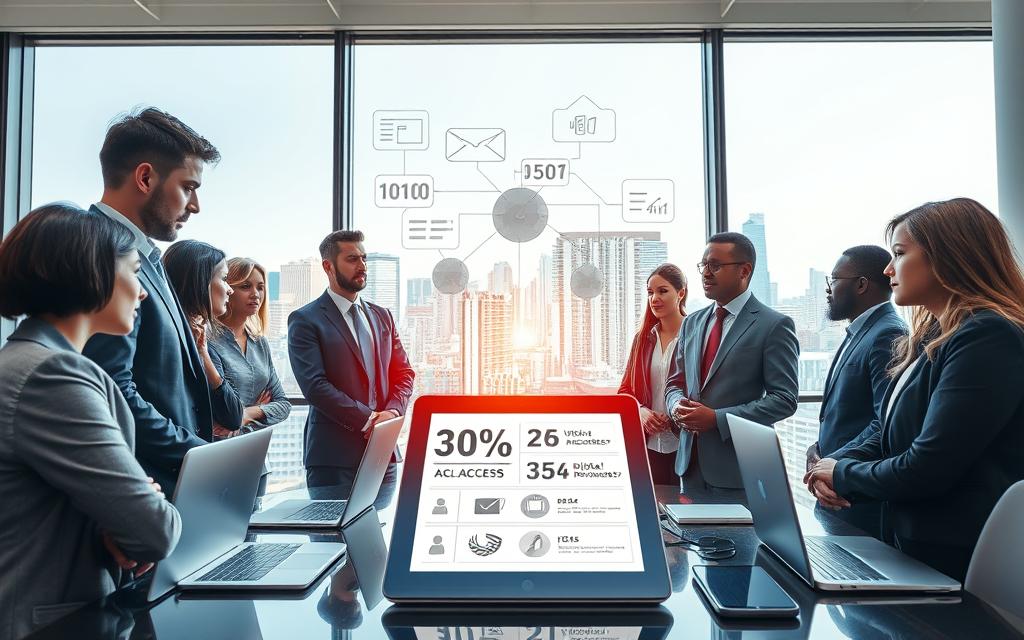
The digital divide is a big social challenge today. Not everyone has equal access to tech’s benefits. This gap affects education, jobs, and social life.
Several things cause this gap:
- Economic barriers stop people from getting devices and internet
- Remote areas lack good tech infrastructure
- Some find it hard to learn new tech because of age
- There are also gender gaps in tech access and education
To close this gap, we need a team effort. Governments, businesses, and communities must work together. We need to improve both tech infrastructure and education.
The table below shows how different groups face digital access challenges:
| Demographic Group | Internet Access Rate | Primary Barriers | Potential Solutions |
|---|---|---|---|
| Low-income households | 62% | Cost of devices and services | Subsidised programmes and public access points |
| Rural communities | 71% | Infrastructure limitations | Broadband expansion initiatives |
| Senior citizens (65+) | 68% | Digital literacy challenges | Tailored training programmes |
| Developing regions | 47% | Multiple systemic factors | International cooperation and investment |
Creating a digital world that includes everyone is good for all. When more people join the digital world, society gets more innovative and connected. Closing the access gap is both a moral duty and an economic chance.
In the end, finding a balance between tech progress and ethics needs ongoing talks. Tech should serve humanity’s best interests. With careful rules and inclusive policies, we can use tech’s power while keeping our values safe.
Emerging Trends and Future Directions
Science is on the verge of big changes, affecting everything from computers to our daily lives. These new technologies will change industries and how we interact with the world. They might even solve some of our biggest problems. Understanding these changes helps us get ready for the big shifts they will bring.
Next-Generation Technologies: Quantum Computing and Internet of Things
Quantum computing is a huge leap forward. It uses qubits, not bits, to solve problems much faster than regular computers. This means solving complex problems in a fraction of the time.
The Internet of Things (IoT) is making our lives smarter. It connects everything, from gadgets in our homes to city systems. This network helps us use resources better and makes life more convenient.
But, these technologies are expensive and hard to adopt. Quantum computers need special equipment and cool temperatures. IoT needs big upgrades to work well. Making these technologies affordable is a big challenge.
Anticipating Societal Changes in the Coming Years
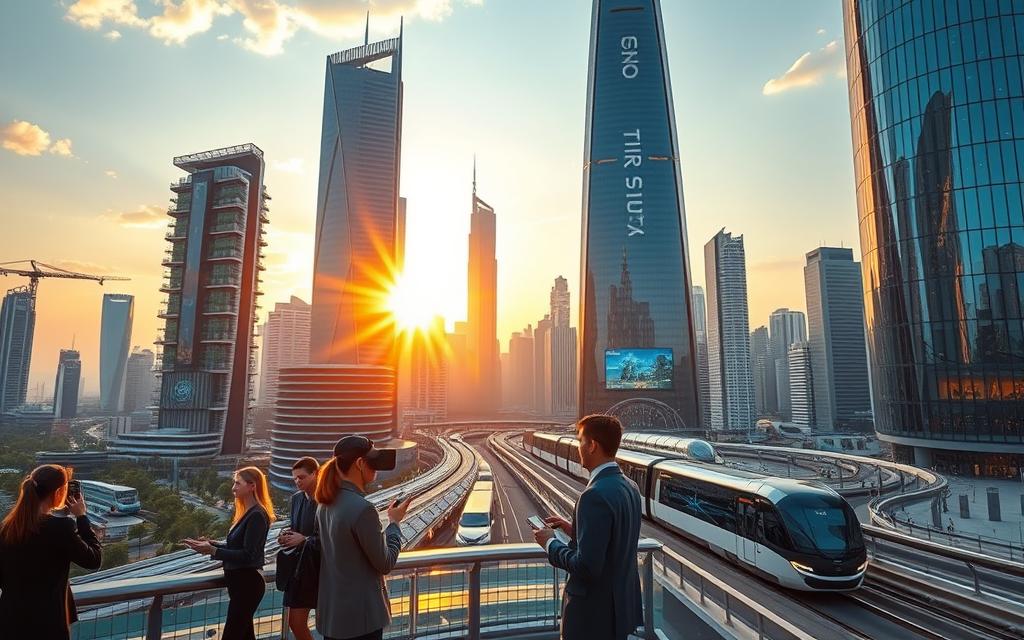
The IoT will change our lives more as more devices connect. Smart cities will use data to improve services and save energy. Our homes will adjust to our needs, saving resources and making us more comfortable.
Quantum computing could change many fields, like medicine and materials science. It could find new medicines and make financial models more accurate. This could lead to big improvements in many areas.
But, these advances could also widen the gap between rich and poor. The early adopters are often the wealthy. We need to make sure everyone can access these benefits.
| Technology | Current Applications | Future Potencial | Accessibility Challenge |
|---|---|---|---|
| Quantum Computing | Research experiments, cryptography | Drug discovery, climate modelling | Extreme cooling requirements |
| Internet of Things | Smart homes, wearable devices | Smart cities, industrial automation | Infrastructure costs |
| Artificial Intelligence | Personal assistants, recommendations | Autonomous systems, predictive healthcare | Computing power requirements |
| Renewable Energy Tech | Solar panels, wind farms | Energy storage, grid optimisation | Manufacturing scale |
Technology’s true value is in how accessible it is. Over time, innovations get cheaper as manufacturing improves. We must make sure everyone can benefit from these advancements.
Future policies will shape how these technologies grow and who benefits. Working together globally can ensure fair access. We also need to educate people for the new jobs these technologies will create.
Strategies for Harmonising Innovation with Human Values
As technology speeds up, we need to make sure it matches our values. This means working together across society.
Regulatory Frameworks and Ethical Guidelines for Technology
Technology regulation is key for innovation that respects people. Governments and global groups must work together to keep up with new tech.
They should set out ethical guidelines for new tech. These should cover privacy, how algorithms work, and who’s accountable.
It’s vital for countries to agree on rules. This stops tech being used in ways that harm us.

The European Union’s General Data Protection Regulation is a good example. Other places can use similar rules, but tailored to their needs.
Companies also have a role. They should have ethical guidelines that go beyond what’s legally required.
Fostering Digital Literacy and Public Engagement
Programmes that boost digital literacy are essential. Schools should teach these skills from a young age.
Teaching science, technology, engineering, and maths is important. But so are skills like critical thinking and being adaptable.
Getting people involved in tech talks is also key. This can be through town halls, online forums, and more.
Training at work helps people adapt to new tech roles. This ensures they can keep up with changes.
Improving digital literacy helps bridge the gap between tech creators and users. This leads to better choices about technology.
Places like community centres and libraries are great for learning. They make sure everyone has a chance to get digital skills, no matter their background.
Conclusion
Science and technology have changed our lives, work, and how we connect. They have brought us healthcare breakthroughs and digital education tools. These changes offer great opportunities but also bring big challenges.
The future of innovation looks exciting with quantum computing and IoT. These new areas could solve big global problems. But, they also raise new ethical questions. We need to make sure technology benefits everyone, not just a few.
To make the most of technology, we need to work together. We must teach people about digital skills and involve everyone in making decisions. This way, we can use technology to improve our world for everyone. We must be careful and work together to create a better future.
Frequently Asked Questions About Science and Technology’s Impact
How does science and technology affect our lives in healthcare?
Science and technology have revolutionized healthcare through AI-enhanced diagnostics, robotic surgeries, and personalized medicine based on genomics. These advancements lead to earlier disease detection, more effective treatments, and faster patient recovery.
What is the impact of technology on communication and connectivity?
Technology has made communication instantaneous and global through smartphones and instant messaging. It has transformed social interactions and enabled widespread remote work and global corporate collaborations, shrinking distances and fostering constant connection.
How has technology changed education?
Technology has fundamentally transformed education through online learning platforms, educational software, and AI-driven personalized learning experiences. It provides global access to knowledge, customized curricula, and interactive learning tools, making education more accessible and engaging.
What are the economic effects of science and technology?
Science and technology have fueled the rise of the gig economy and remote work, offering new employment models. Automation and robotics are reshaping job markets, leading to efficiency gains but also requiring workers to adapt with new skills and fostering the creation of new types of jobs.
How does technology contribute to environmental sustainability?
Technology is crucial for environmental sustainability through advancements in renewable energy sources like solar and wind power, as well as carbon capture technologies and smart grids. It helps monitor climate change, reduce waste, and improve resource management.
What ethical challenges does technology pose?
Technology introduces ethical challenges related to data privacy, security, and surveillance. It also exacerbates the digital divide, raising questions about equitable access to technological benefits and the responsible development of AI and other powerful tools.
How to Adapt to a Tech-Driven Society in 2026
Step 1: Embrace Lifelong Learning
Continuously update your skills, especially digital literacy and critical thinking, to remain relevant in evolving job markets. Utilize online courses, workshops, and educational software to acquire new knowledge.
Step 2: Prioritize Digital Wellbeing
Balance online engagement with real-world interactions. Manage screen time, be mindful of data privacy, and protect your digital identity to maintain mental and physical health in a hyper-connected world.
Step 3: Engage in Ethical Tech Discussions
Participate in conversations about technology regulation and ethical guidelines. Understand the implications of new technologies on society and advocate for policies that promote equity and human values.
Step 4: Leverage Green Technologies
Adopt sustainable practices in your daily life by utilizing renewable energy sources, supporting eco-friendly innovations, and being conscious of your environmental footprint, contributing to global climate action.
Step 5: Advocate for Digital Inclusion
Support initiatives that aim to bridge the digital divide, ensuring equitable access to technology and digital education for all members of society, regardless of socioeconomic status or geographic location.
Key Terms in Science and Technology’s Impact on Society
Artificial Intelligence (AI)
AI refers to the simulation of human intelligence in machines that are programmed to think like humans and mimic their actions. It plays a significant role in diagnostics, personalized education, and automation.
Gig Economy
A labor market characterized by the prevalence of short-term contracts or freelance work, as opposed to permanent jobs. It’s largely facilitated by digital platforms and contributes to flexible work arrangements.
Personalised Medicine
A medical model that customizes healthcare—with decisions and treatments being tailored to each individual patient. This approach often uses genetic or genomic information to guide decisions for the prevention, diagnosis, and treatment of disease.
Digital Divide
The gap between those who have ready access to computers and the Internet, and those who do not. This disparity can be due to socioeconomic, geographic, or other factors, impacting access to education, employment, and information.
Quantum Computing
A new type of computing that uses the principles of quantum mechanics to perform calculations, allowing it to solve certain complex problems much faster than classical computers. It has potential applications in drug discovery, materials science, and financial modeling.
Internet of Things (IoT)
A network of physical objects—”things”—that are embedded with sensors, software, and other technologies for the purpose of connecting and exchanging data with other devices and systems over the internet. It enables smart homes, smart cities, and industrial automation.
