
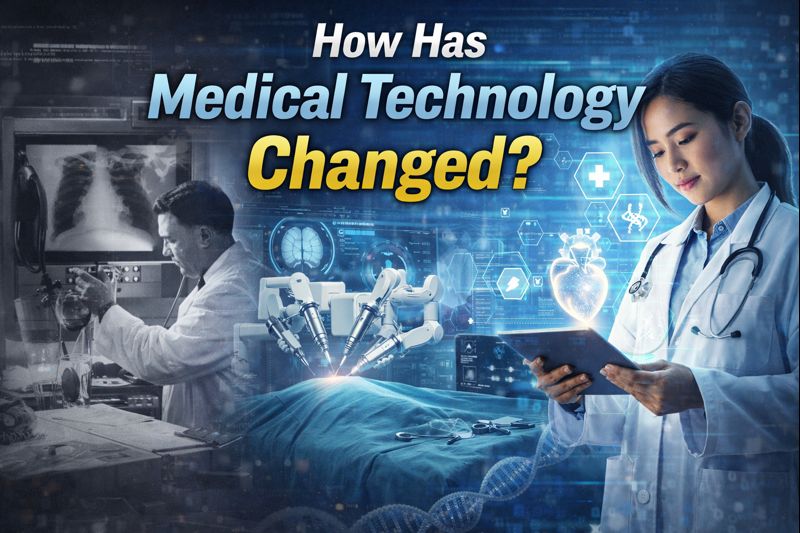
The landscape of healthcare has undergone a profound metamorphosis, evolving from rudimentary practices to an era defined by precision and personalized care. For centuries, medical advancements progressed at a relatively measured pace, but the turn of the 21st century unleashed a torrent of technological innovations that have fundamentally reshaped how we diagnose, treat, and prevent illnesses. Examining how has medical technology changed reveals a fascinating journey of discovery, innovation, and an unwavering commitment to improving human health. From microscopic nanobots to expansive AI diagnostic systems, the impact is undeniable, promising a future where once-incurable conditions may become manageable, and life expectancies continue to rise.
Key Takeaways
- Diagnostic Revolution: Advanced imaging, genetic testing, and AI-powered diagnostics have enabled earlier and more accurate disease detection.
- Minimally Invasive Treatments: Robotic surgery, endoscopy, and targeted drug delivery have reduced recovery times and improved patient outcomes.
- Personalized Medicine: Genomic sequencing and pharmacogenomics allow for treatments tailored to individual patient profiles, enhancing effectiveness and minimizing side effects.
- Remote Healthcare & Accessibility: Telemedicine, wearable devices, and digital health platforms have expanded access to care, particularly in underserved areas.
- Ethical Considerations & Future Horizons: Rapid technological progress necessitates ongoing discussions about data privacy, equitable access, and the ethical implications of advanced bioengineering.
The Dawn of Modern Medical Technology
To truly appreciate how has medical technology changed, it is crucial to glance back at its origins. For much of human history, medical interventions were often crude, relying on observation, herbal remedies, and sometimes invasive, unsterilized procedures. The 19th and 20th centuries brought foundational shifts with the understanding of germ theory, the invention of antibiotics, and the development of X-rays. However, it is in the last few decades, particularly leading up to 2026, that the pace of change has become exponential.
The journey began with mechanical improvements: better surgical tools, more effective prosthetics, and the widespread adoption of anesthesia. Then came the electronic era, introducing ECGs, EEGs, and early forms of medical imaging. But the digital revolution, combined with breakthroughs in biology and materials science, truly propelled medical technology into its current, transformative phase. The integration of computers, sophisticated data analysis, and advanced materials has paved the way for innovations that were once the realm of science fiction.
The Diagnostic Revolution: Seeing the Unseen
One of the most significant ways how has medical technology changed lies in its ability to diagnose diseases with unprecedented accuracy and speed. Early detection is often key to successful treatment, and modern tools have pushed the boundaries of what’s possible.
Advanced Imaging Techniques
Gone are the days when X-rays were the pinnacle of internal visualization. Today, a spectrum of imaging technologies provides detailed, three-dimensional views of the body’s internal structures.
- MRI (Magnetic Resonance Imaging): Offers exquisite detail of soft tissues, differentiating between healthy and diseased tissue without using ionizing radiation. It’s invaluable for brain, spinal cord, and joint conditions.
- CT (Computed Tomography) Scans: Combine multiple X-ray images from different angles to create cross-sectional views. They are crucial for emergency diagnostics, bone injuries, and detecting cancers.
- PET (Positron Emission Tomography) Scans: Use a radioactive tracer to detect metabolic activity, revealing diseases at a cellular level, often before structural changes are visible. This is particularly useful in oncology and neurology.
- Ultrasound (Sonography): Non-invasive, real-time imaging using sound waves, indispensable for obstetrics, cardiology, and guiding biopsies.
These technologies, often enhanced by artificial intelligence for image analysis, allow clinicians to spot abnormalities far earlier and with greater precision, leading to timely interventions.
Genomic Sequencing and Genetic Testing
Perhaps no area exemplifies how has medical technology changed more profoundly than genomics. The ability to read and understand an individual’s genetic code has opened up entirely new avenues for diagnosis, risk assessment, and treatment.
- Whole Genome Sequencing (WGS): Provides a complete map of an individual’s DNA, identifying genetic predispositions to diseases, pinpointing the genetic basis of rare disorders, and guiding targeted therapies.
- Pharmacogenomics: Studies how genes affect a person’s response to drugs. This allows doctors to prescribe medications that are more likely to be effective and less likely to cause adverse side effects based on a patient’s genetic makeup.
- Non-Invasive Prenatal Testing (NIPT): Screens for chromosomal abnormalities in a fetus using a blood sample from the mother, significantly reducing the need for more invasive procedures.
The decreasing cost and increasing speed of genetic sequencing have made it a powerful tool, transforming fields from oncology to rare disease diagnostics. This shift toward genetic understanding highlights a major trend in medicine: moving from a one-size-fits-all approach to highly individualized care.
Related Posts:



Artificial Intelligence (AI) in Diagnostics
The integration of AI and machine learning is rapidly redefining diagnostic capabilities. AI algorithms can analyze vast datasets—from medical images and patient records to genetic information—to identify patterns that human eyes might miss.
- Image Recognition: AI excels at analyzing medical images (X-rays, MRIs, pathology slides) to detect subtle signs of disease, such as cancerous lesions or diabetic retinopathy, often with accuracy comparable to, or even exceeding, human experts [1].
- Predictive Analytics: AI models can predict a patient’s risk of developing certain conditions based on their genetic profile, lifestyle, and medical history, allowing for proactive preventive measures.
- Drug Discovery: AI is accelerating the process of identifying potential drug candidates and understanding their interactions, drastically cutting down the time and cost associated with developing new treatments.
The impact of AI on diagnostic speed and accuracy is a cornerstone of how has medical technology changed in recent years, offering powerful tools to clinicians and researchers alike. To understand more about the role of advanced algorithms in modern society, one might explore [what does API mean in technology](http://techtops.co.uk/what-does-api-mean-in-technology-connecting-software-systems/) and its broader implications.
Revolutionary Treatment Modalities
Beyond diagnostics, treatments have also undergone radical transformation, becoming less invasive, more targeted, and significantly more effective.
Minimally Invasive Surgery and Robotics
One of the most patient-centric shifts in modern medicine is the move towards minimally invasive procedures.
- Laparoscopic and Endoscopic Surgery: Instead of large incisions, surgeons now perform many procedures through small cuts using specialized instruments and cameras. This leads to less pain, reduced blood loss, smaller scars, and faster recovery times.
- Robotic-Assisted Surgery: Systems like the da Vinci Surgical System allow surgeons to perform complex procedures with enhanced precision, dexterity, and control. The robot’s “wrists” have a greater range of motion than human hands, and the 3D high-definition vision system provides unparalleled clarity. Robotic surgery is widely used in urology, gynecology, cardiology, and general surgery.
This evolution in surgical techniques demonstrates a clear answer to how has medical technology changed by prioritizing patient comfort and rapid recuperation.
Targeted Therapies and Precision Medicine
The days of broad-spectrum treatments, which often came with significant side effects, are giving way to highly precise interventions.
- Immunotherapy: Harnesses the body’s own immune system to fight diseases, particularly cancer. Instead of directly attacking cancer cells, immunotherapy drugs stimulate the immune system to recognize and destroy them.
- Gene Therapy: Involves introducing, removing, or changing genetic material in a patient’s cells to treat or prevent disease. This revolutionary approach holds immense promise for genetic disorders like cystic fibrosis and muscular dystrophy [2].
- CRISPR-Cas9: A powerful gene-editing tool that allows scientists to make precise changes to DNA sequences. This technology has the potential to correct genetic mutations responsible for various diseases, offering a new frontier in treatment.
- Nanomedicine: The application of nanotechnology to medicine. Nanoparticles can be engineered to deliver drugs directly to diseased cells, minimize side effects, and improve drug efficacy. This allows for highly targeted drug delivery, particularly in cancer treatment, avoiding damage to healthy tissues.
These advanced therapies are moving medicine towards a truly personalized approach, where treatments are tailored to the unique biological characteristics of each patient.
Regenerative Medicine and Tissue Engineering
The field of regenerative medicine focuses on repairing or replacing damaged tissues and organs.
- Stem Cell Therapy: Uses stem cells, which have the ability to differentiate into various cell types, to repair or replace damaged tissue. This has shown promise in treating conditions such as spinal cord injuries, heart disease, and diabetes.
- 3D Bioprinting: Allows for the creation of complex biological structures, including tissues and organs, layer by layer using living cells. While still in its early stages for functional organs, 3D bioprinting is already being used to create tissues for drug testing and research.
- Prosthetics and Implants: Advances in materials science and electronics have led to highly sophisticated prosthetics that can be controlled by muscle signals (myoelectric prosthetics) and implants that integrate seamlessly with the body, improving quality of life for millions.
These breakthroughs represent a profound shift in how has medical technology changed, offering hope for conditions that were once considered untreatable.
The Rise of Digital Health and Remote Care
Beyond the clinic and operating room, technology has dramatically expanded access to healthcare and empowered individuals to manage their own health.
Telemedicine and Virtual Consultations
The COVID-19 pandemic significantly accelerated the adoption of telemedicine, but its foundations were laid long before. Telemedicine platforms allow patients to consult with doctors, receive diagnoses, and even get prescriptions remotely through video calls, phone calls, or secure messaging.
- Benefits: Increased access to specialists, especially in rural or underserved areas; reduced travel time and costs for patients; continuity of care for chronic conditions; and enhanced efficiency for healthcare providers.
- Applications: Routine follow-ups, mental health counseling, remote monitoring of chronic diseases, and even some emergency consultations.
Telemedicine fundamentally alters how has medical technology changed the patient-doctor relationship, making healthcare more convenient and accessible. This shift also reflects broader societal changes driven by technology, as discussed in articles like [how technology affects our daily lives](http://techtops.co.uk/how-technology-affects-our-daily-lives-a-comprehensive-essay/).
Wearable Devices and Remote Monitoring
The proliferation of smartwatches, fitness trackers, and specialized medical wearables has brought healthcare directly into people’s daily lives.
- Fitness Trackers: Monitor activity levels, heart rate, sleep patterns, and increasingly, blood oxygen saturation.
- Medical Wearables: Include continuous glucose monitors for diabetics, smart patches that track vital signs (ECG, temperature, respiration), and even devices that detect falls in elderly individuals.
- Benefits: Early detection of health issues, proactive management of chronic conditions, encouragement of healthier lifestyles, and personalized health insights.
These devices collect real-time data, which can be shared with healthcare providers, enabling more informed decision-making and preventive care.
Digital Health Records and Interoperability
The transition from paper charts to electronic health records (EHRs) has been a massive undertaking, but its benefits are undeniable.
- EHRs: Centralize patient information, including medical history, medications, allergies, lab results, and imaging reports. This improves efficiency, reduces errors, and ensures that all healthcare providers have access to the most up-to-date information.
- Interoperability: The ability of different health information systems and devices to communicate and exchange data seamlessly. Achieving true interoperability remains a challenge but is crucial for coordinated care across different hospitals, clinics, and specialists.
Improved data management and sharing are critical components of how has medical technology changed the operational efficiency and quality of care within the healthcare system. For more on how technology impacts broader organizational structures, one might explore [how science and technology affect our lives](http://techtops.co.uk/how-science-and-technology-affect-our-lives-transforming-society/).
Big Data and Healthcare Analytics
The sheer volume of data generated by modern medical technology—from genomic sequences and imaging scans to wearable device metrics and EHRs—is staggering. Turning this raw data into actionable insights is where big data analytics comes in.
- Population Health Management: Analyzing health data across large populations to identify trends, predict outbreaks, and develop effective public health strategies.
- Personalized Treatment Pathways: Using data to identify which treatments are most effective for specific patient subgroups, leading to more tailored and successful interventions.
- Resource Optimization: Helping hospitals and healthcare systems manage resources more efficiently, from scheduling appointments to allocating medical equipment.
The intelligent use of big data is fundamentally changing how has medical technology changed healthcare at a systemic level, leading to more efficient, effective, and equitable care delivery.
Ethical Considerations and Future Directions
While the advancements in medical technology are overwhelmingly positive, they also bring forth a complex array of ethical, social, and economic considerations.
Data Privacy and Security
With the vast amount of sensitive personal health information being collected, stored, and shared, ensuring robust data privacy and cybersecurity is paramount. Breaches can have severe consequences, highlighting the need for continuous vigilance and advanced security protocols.
Equitable Access
The benefits of advanced medical technology must be accessible to everyone, not just those in affluent areas or with comprehensive insurance. Addressing disparities in access, particularly in developing nations, is a critical challenge. The discussion around [does technology benefit society](http://techtops.co.uk/does-technology-benefit-society-the-impact-on-modern-life/) often underscores this challenge of equitable distribution.
The Human Element
As AI and robotics become more integrated into healthcare, maintaining the empathetic and human aspects of care remains vital. Technology should augment, not replace, the compassionate connection between patients and providers.
Emerging Technologies
Looking ahead to 2026 and beyond, the pace of innovation shows no signs of slowing down.
- Brain-Computer Interfaces (BCIs): These technologies aim to restore function to individuals with neurological disorders, allowing them to control prosthetics or communicate using their thoughts.
- Advanced Gene Editing: Further refinement of CRISPR and other gene-editing tools promises even more precise and safer ways to correct genetic defects.
- Synthetic Biology: Creating new biological parts, devices, and systems, or redesigning existing natural biological systems for useful purposes, such as developing novel therapeutics or diagnostic tools.
- Quantum Computing in Medicine: While still nascent, quantum computing has the potential to revolutionize drug discovery, material science for implants, and complex biological simulations due to its immense processing power.
The journey of how has medical technology changed is far from over. It is a continuous evolution, driven by human ingenuity and the relentless pursuit of better health outcomes for all.
“The fusion of biology, engineering, and data science has ushered in an era where personalized medicine is not just a concept, but a tangible reality, reshaping the very fabric of healthcare.” — [Dr. Anya Sharma, Biomedical Ethicist, 2026]
Understanding Key Terms in Medical Technology
- Personalized Medicine
- A medical model that customizes healthcare—with decisions and treatments tailored to the individual patient. This approach uses a person’s unique genetic profile, environment, and lifestyle to determine the best course of treatment. Also known as precision medicine.
- Telemedicine
- The practice of providing clinical healthcare remotely using telecommunications technology. This includes video calls, phone consultations, and secure messaging to deliver medical services without an in-person visit.
- Genomic Sequencing
- The process of determining the complete DNA sequence of an organism’s genome at a single time. In medicine, it often refers to sequencing a human’s entire genome to identify genetic variations associated with diseases or drug responses.
- Artificial Intelligence (AI)
- The simulation of human intelligence processes by machines, especially computer systems. These processes include learning, reasoning, and self-correction. In medicine, AI is used for diagnostics, drug discovery, and predictive analytics.
- Bioprinting
- An additive manufacturing process that uses cells and biomaterials to fabricate biomedical parts, layer-by-layer, with a goal of creating functional tissues or organs. It’s a key technology in regenerative medicine.
Practical Applications of Medical Technology: A How-To Guide
Here’s how some of these technological advancements translate into practical benefits for patients and healthcare providers in 2026:
How to Access Telemedicine Services
-
Check Your Insurance Coverage
Many insurance plans now cover telemedicine visits. Contact your provider to understand your benefits and any associated co-pays.
-
Find a Telemedicine Provider
Your existing doctor’s office may offer virtual appointments, or you can use dedicated telemedicine platforms like Teladoc or Amwell. Ensure the provider is licensed in your state.
-
Schedule an Appointment
Book your virtual visit online or by phone. You’ll usually receive instructions on how to connect for your appointment.
-
Prepare for Your Virtual Visit
Ensure you have a stable internet connection, a quiet and private space, and your device (smartphone, tablet, or computer) is charged. Have a list of your symptoms, medications, and any questions ready.
-
Connect with Your Doctor
At your appointment time, log into the platform. You’ll then be connected with your healthcare provider for your consultation.
Typical Supplies Needed: Smartphone/Tablet/Computer, Stable Internet Connection
Helpful Tools: Video Conferencing Software (e.g., Zoom, Doxy.me), Telemedicine Platform Apps
Conclusion
The evolution of medical technology has been nothing short of astounding. How has medical technology changed from rudimentary practices to the highly sophisticated, data-driven systems of 2026 represents a journey of continuous innovation. From precision diagnostics and minimally invasive treatments to personalized medicine and widespread remote care, technology has fundamentally reshaped every facet of healthcare. The integration of AI, genomics, robotics, and advanced materials has not only extended lifespans but also dramatically improved the quality of life for countless individuals.
However, this rapid advancement also comes with responsibilities. Addressing ethical considerations, ensuring equitable access, and safeguarding patient data are crucial as we continue to push the boundaries of what’s possible. The future promises even more transformative breakthroughs, driven by ongoing research and development. Patients are now more empowered than ever, with greater access to information and a more active role in their healthcare journey. For further exploration of how technology shapes various aspects of our world, consider delving into [the most important technologies shaping our world](http://techtops.co.uk/the-most-important-technologies-shaping-our-world/). The story of medical technology is a testament to human ingenuity, a story that continues to unfold with exciting new chapters every year.
Actionable Next Steps:
- Stay Informed: Keep abreast of new medical technologies and discuss potential benefits with your healthcare provider.
- Embrace Digital Health: Explore telemedicine options and consider using reliable health tracking wearables to monitor your well-being.
- Advocate for Data Security: Understand your rights regarding health data privacy and support initiatives that protect sensitive medical information.
- Promote Equitable Access: Support policies and organizations working to ensure that advanced medical technologies are available to all, regardless of socio-economic status.
References
[1] Esteva, A., et al. (2017). Dermatologist-level classification of skin cancer with deep neural networks. Nature, 542(7639), 115-118.
[2] High, K. A. (2017). Gene therapy: The next generation. Nature Medicine, 23(11), 1269-1271.
Frequently Asked Questions about Medical Technology
What is personalized medicine?
Personalized medicine, also known as precision medicine, is an approach that tailors medical treatment to each patient’s unique characteristics. This includes their genetic makeup, lifestyle, and environment, allowing for more effective treatments and fewer side effects.
How does AI contribute to medical advancements?
AI plays a crucial role in medical advancements by enhancing diagnostics through image analysis, predicting disease risks, accelerating drug discovery by identifying potential candidates, and optimizing treatment plans based on vast datasets.
Is telemedicine as effective as in-person visits?
For many conditions, particularly routine follow-ups, chronic disease management, and mental health consultations, telemedicine has proven to be highly effective. It offers convenience and accessibility. However, for conditions requiring physical examination or emergency care, in-person visits remain essential.
What are the main ethical concerns with new medical technologies?
Key ethical concerns include ensuring data privacy and security for sensitive health information, guaranteeing equitable access to advanced treatments for all populations, and addressing the societal implications of technologies like gene editing and AI in diagnosis and treatment decision-making.
How will medical technology continue to change by 2030?
By 2030, medical technology is expected to see further integration of AI for predictive health, more widespread use of gene editing therapies, advancements in regenerative medicine, and enhanced remote monitoring capabilities. Brain-computer interfaces and nanomedicine are also likely to progress significantly, offering new avenues for treating neurological conditions and delivering highly targeted therapies.
 Marcin Wieclaw