


Today, our world is deeply connected through digital tools. These innovations have changed how we live and work. They are now key parts of many areas of life.
Thanks to technology, communication, healthcare, and education have seen huge leaps forward. These tools help us stay connected and work more efficiently every day.
But, the digital age also brings its own set of problems. We must think about privacy and how technology affects our wellbeing.
The real worth of these advancements depends on how we use them. Their impact is something we’re always discussing and debating.
The Pervasive Role of Technology in Contemporary Society
Technology has changed how we live and interact. It affects our work, communication, learning, and relationships. Today, technology and society influence each other’s growth.
Defining Modern Technological Integration
Our daily lives are filled with digital tools. Smartphones help us stay connected, social media builds communities, and cloud computing makes information easy to access. This makes technology a key part of our lives.
Workplaces have changed with new software and remote work options. Our homes are filled with smart devices that control security and entertainment. This shows a big change in how we live.
Technology works quietly in the background. It powers our payment systems, transport, and communication. This shows how advanced our technology has become.
Related Posts:
- How Technology Affects Our Daily Lives A Comprehensive Essay

- How Technology Affects Family Communication Digital…

- How Science and Technology Affect Our Lives…

- The Most Important Technologies Shaping Our World

- How Technology Changed Communication From Letters to…

- How Technology Is Bad For Us The Negative Side Effects

Historical Context of Technological Advancement
Technology has evolved with big leaps and small steps. Early humans used stone tools for hunting. The agricultural revolution brought ploughs and irrigation, leading to settled communities.
The industrial revolution brought steam power and new manufacturing methods. Each step changed society, economy, and culture. As one historian said,
Societies shape the technologies that are developed and used and that those technologies in turn shape societies.
The computer revolution in the mid-20th century was a big leap. Computing power grew fast, and devices got smaller and cheaper. This made computers available to many, not just a few.
The internet connected devices worldwide, changing communication. Mobile technology made this network mobile. These changes mark the latest stage in our technological journey.
| Technological Era | Key Innovations | Social Impact | Time Period |
|---|---|---|---|
| Agricultural Revolution | Ploughs, irrigation systems | Formation of settled communities | 10,000 BCE |
| Industrial Revolution | Steam engine, manufacturing | Urbanisation, factory labour | 1760-1840 |
| Computer Revolution | Transistors, personal computers | Information accessibility | 1950-2000 |
| Digital Revolution | Internet, mobile technology | Global connectivity | 2000-present |
Each technological leap built on past ones, bringing big changes. Today’s technology blends the physical and digital in new ways. Knowing our history helps us understand today’s tech world.
Does Technology Benefit Society: An Overview
Technology has a big impact on our daily lives and on communities. It makes things better and helps us grow together. This look into technology shows how it brings real benefits and helps us move forward.
Quantifiable Improvements in Quality of Life
Today’s tech makes life easier and more accessible. We can get to important services like health care and learning online, no matter where we are.
These changes bring real gains, such as:
- Being able to work from anywhere and stay productive
- Staying in touch with others easily
- Having all the data we need to make smart choices
- Getting to health care and learning easily
Technology has changed how we live and work. It gives us tools to keep up with life, even when things get tough.

Societal Progress Through Innovation
Innovation through technology helps us solve big problems. It makes things fairer, opens up new trade chances, and gets more people access to services.
These innovation benefits do more than just make life easier. They help us reach big goals like reducing poverty and improving health care.
The World Bank says tech can help us meet all 17 Sustainable Development Goals. This shows how tech can lead to big social changes, not just small fixes.
Technology and social progress are closely linked. They help us tackle old problems and open up new ways for everyone to grow together.
Revolutionising Communication and Connectivity
Digital networks have changed how we connect across the world. This change affects our personal and work lives, bringing new chances and challenges.
The Digital Communication Landscape
Today’s digital communication systems are advanced. They let us talk to anyone, anywhere, instantly. This has made long-distance chats much easier.
Instant Global Communication Networks
We can stay in touch with loved ones easily now. Studies show we’re just a message away, no matter where we are.
This quick access has changed how we keep in touch, both personally and at work. It’s made the world feel more connected.
Social media connects almost half the world. It’s opened up new ways to make friends and share experiences. Just a few years ago, these connections were impossible.
But, research warns that social media can also spread hate and divide us. It can create echo chambers and polarise opinions.
“Social media is both a blessing and a curse. It brings us together but can also deepen our differences.”
The table below shows how different communication tools compare:
| Platform Type | Connection Speed | Global Reach | Relationship Depth |
|---|---|---|---|
| Video Conferencing | Real-time | Worldwide | High emotional connection |
| Social Media | Instant | Borderless | Variable engagement levels |
| Messaging Apps | Immediate | Cross-platform | Personal and group chats |
| Email Systems | Near-instant | Universal | Formal communication |
Remote Work and Digital Collaboration
Remote work has changed the office scene with new tools. This change is one of the biggest in work history.
Transformation of Workplace Dynamics
Digital tools have removed distance barriers. Now, companies can hire talent from anywhere. Teams can work together, no matter where they are.
This flexibility has made work more productive and satisfying. Being able to work from anywhere is now a big plus for jobs.
Challenges in Digital Workspaces
Despite the benefits, digital workspaces have their own challenges. Many struggle to leave work behind because their office is their phone.
Missing out on face-to-face chats can make teamwork harder. Companies need to find ways to keep their culture alive online.
Success in remote work depends on finding the right balance between tech and human needs. Companies that get this right can stay ahead in the global market.
Healthcare Advancements Through Technology
Technology is changing healthcare in big ways. It’s making patient care better and medical services more efficient. Digital solutions are a key part of this change.
Medical Diagnostics and Treatment Innovations
New medical innovations are changing how doctors diagnose and treat patients. Advanced imaging, AI, and robots are making medical assessments more accurate.
Precision Medicine and Genomics
Genomics and data analytics are leading to personalised treatments. Digital health solutions help doctors tailor treatments to each patient’s genetic makeup.
Genetic tests can spot disease risks early. This means doctors can take steps to prevent illness before it starts. It’s a big shift from treating sickness after it happens.
Telemedicine and Remote Healthcare
Virtual doctor visits are becoming more common. They help people in remote areas get specialist care without having to travel far.
Remote monitoring devices send health data to doctors in real-time. This helps with ongoing care outside of hospitals. These healthcare technology tools are great for managing long-term health conditions.
Public Health and Disease Prevention
Technology has improved our ability to track and prevent diseases. Public health groups use advanced systems to monitor health trends and spot outbreaks early.
Epidemiological Tracking Systems
Advanced data analytics help find patterns in health data. These systems were key in responding to recent global health crises. They allowed for quick action.
Research in PMC articles shows AI is helping save lives and extend life expectancy. It’s improving how we monitor diseases.
Health Monitoring Wearables
Wearable devices like smartwatches are helping people manage their health. They track vital signs, activity, and sleep. This gives insights for staying healthy.
These devices can warn users of health issues early. The data they collect helps doctors make better decisions for patient care.
The ongoing development of medical innovations is making healthcare more personal and accessible. These digital health solutions are just the start of how technology can change health outcomes worldwide.
Educational Transformation in the Digital Age
Technology has changed how we learn and develop skills. The digital revolution in education brings new chances but also challenges like access and relevance.
E-Learning Platforms and Accessibility
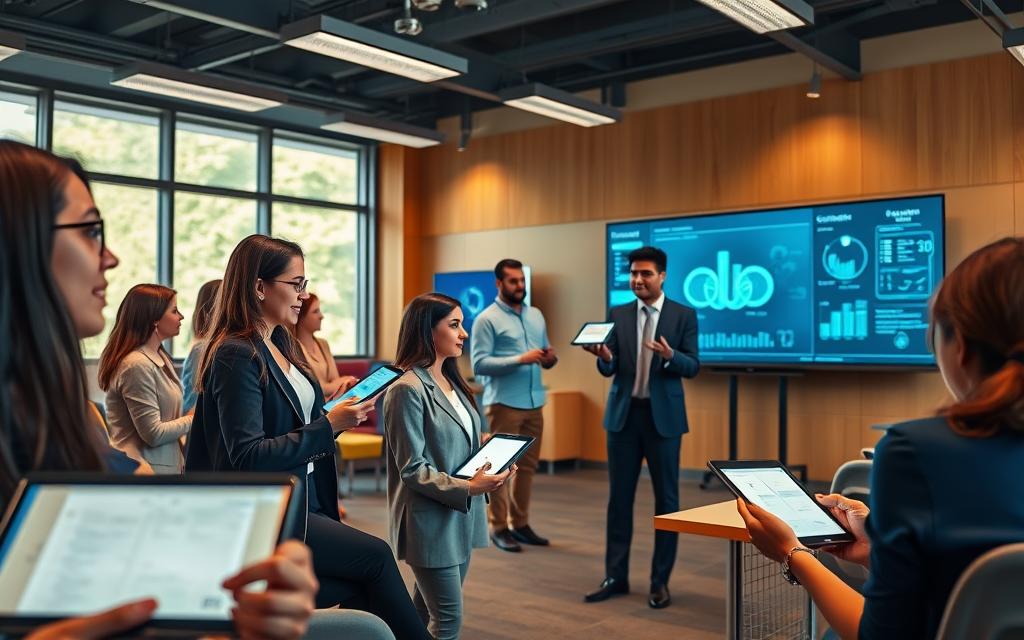
Digital learning environments have broken down old barriers to education. Students can now learn from home, accessing lectures, discussions, and assignments. This flexibility helps learners who might be left out.
Massive Open Online Courses (MOOCs)
MOOCs have made digital education more accessible. Sites like Coursera and edX offer high-quality courses worldwide at low cost. These courses provide:
- Access to top universities
- Flexible learning times
- A wide range of subjects
- International certification
Personalised Learning Technologies
Adaptive learning systems adjust to each learner’s needs. They use student performance to change the difficulty and focus. The benefits are:
- Learning paths tailored to you
- Quick feedback
- Better retention of knowledge
- Less frustration for those struggling
“Virtual learning environments have opened up programmes to students who would normally be excluded.”
Digital Literacy and Skill Development
As technology advances, so do the skills needed to succeed. Digital literacy development is key for personal and professional growth.
Preparing for Future Workforce Needs
The automation economy requires new skills in all fields. Schools must update their courses to include:
| Emerging Skill Area | Industry Application | Learning Approach |
|---|---|---|
| Data Analysis | Healthcare, Finance, Marketing | Project-based learning |
| AI Literacy | Manufacturing, Customer Service | Interactive simulations |
| Cybersecurity Fundamentals | All digital industries | Scenario-based training |
| Digital Collaboration | Remote work environments | Virtual team projects |
Bridging the Digital Skills Gap
There’s a big gap in tech access and skills. To close it, we need:
- Community tech centres in poor areas
- Programmes for learning between generations
- Training sponsored by companies
- Government projects for digital inclusion
These steps help make sure technology benefits everyone, not just some. The change in education through technology is a big impact on society, full of chances and big responsibilities.
Economic Impacts and Digital Economies
Technology has changed the world’s economy in big ways. Digital economies bring new chances and big challenges that need careful handling.
Technology-Driven Economic Growth
Modern tech boosts the economy in many ways. It makes things more efficient, opens up new markets, and changes old industries.
Startup Ecosystems and Innovation Hubs
Technology helps startups grow fast all over the world. Places like Silicon Valley and new tech spots in Europe and Asia show how digital tools help new businesses.
These areas get many benefits:
- Access to global talent and tools for working together from afar
- Online marketing ways to reach people all over the world
- Cloud computing that lowers startup costs a lot
Automation and Productivity Gains
Automation has changed how work is done in many fields. It makes things like making goods, moving stuff, and services work better with robots and AI.
But, it also means jobs might change. Studies say about 800 million jobs could go by 2030. This means we need to teach people new skills for the digital economy.
E-Commerce and Consumer Behaviour
Technology has changed how we shop. Online shopping and digital payments have changed how we buy things.
The Rise of Digital Marketplaces
Digital marketplaces have made it easier for businesses to sell to people all over. Sites like Amazon, eBay, and Alibaba let small businesses sell to anyone, anywhere, with little setup.
This has opened up new chances for businesses but also makes old ways of selling hard to keep up. The e-commerce impact is big, affecting things like shipping, marketing, and how we talk to customers.
Changing Retail Landscapes
Old-fashioned shops have had to change to keep up with online shopping. Many now offer shopping both online and in stores.
How we shop has changed too. Now, we expect:
- Shopping online and in stores to be easy
- Personalised tips based on what we like
- To find out about products quickly
- Flexible ways to get and return things
As economic growth technology keeps getting better, shops will keep changing. Businesses need to stay quick to grab new chances and deal with the problems of going digital.
Privacy and Security Considerations
Digital technologies are now a big part of our lives. They bring both benefits and risks. We need to be careful and protect ourselves well.
Data Protection in the Digital Era
We create a lot of personal data online. This data is collected in many ways, which can be good or bad.
Cybersecurity Threats and Mitigation
Companies face many cyber threats. These include malware, phishing, and ransomware. They aim to steal important information.
To stay safe, we need strong security. This includes using encryption, keeping systems updated, and training employees.

Businesses should use advanced threat detection. They need to watch for threats all the time and have plans to deal with them.
Regulatory Frameworks and Compliance
Laws like GDPR in Europe and US state laws protect our data. They tell companies how to handle our information.
Companies must follow these rules. They need to be open about how they collect data and keep it safe.
Checking if they follow the rules is important. Not following the rules can cost a lot and harm their reputation.
Surveillance Technologies and Civil Liberties
Modern surveillance tools are a big issue. They can help keep us safe but also threaten our freedom.
Balancing Security and Privacy Rights
Police use surveillance to fight crime. Tools like facial recognition and tracking help them do their job.
But, these tools must be used legally. We need rules and checks to stop abuse.
There’s always a debate about how much surveillance is okay. We need to find a balance that protects our rights.
Ethical Implications of Monitoring
Surveillance raises big ethical questions. It can make us feel like we’re being watched all the time.
Companies must think about the impact of their monitoring. It’s not just about being able to do it, but whether it’s right.
We need clear rules and to think about fairness. Monitoring can affect different people in different ways.
As technology gets better, we must keep checking if it’s right. We need to make sure it doesn’t harm our freedom too much.
Social Inequality and Digital Divides
Technology has the power to improve society, but it also creates new barriers. The digital divide is a big challenge in our connected world. It affects who can get an education, find a job, and join in social activities.

Access Disparities Across Demographics
Not everyone has the same access to technology. This creates unfair disadvantages for some groups. Those who are already facing challenges in society are often hit the hardest.
Urban-Rural Technology Gaps
Where you live affects your internet and technology options. Cities usually have better internet and more services. But, rural areas have limited choices, high costs, and poor infrastructure.
This gap affects education, healthcare, and jobs. In remote areas, slow internet makes online learning and work hard or impossible.
Socioeconomic Barriers to Access
Money is a big problem for getting technology. Poor families often can’t afford devices and internet. The cost of technology is a big barrier for those who are less well off.
Studies show that certain groups are left behind. These include women, older people, people with disabilities, and those from ethnic minorities. They miss out on technology’s benefits, making social inequalities worse.
Addressing Technological Exclusion
We need to work together to solve this problem. We need community efforts and policies that see digital access as a basic right.
Digital Inclusion Initiatives
Many groups and companies are working to close the gap. They offer affordable internet, digital skills training, and content for those who need it most.
- Public computing centres in libraries and community spaces
- Low-cost internet programmes for qualifying households
- Digital literacy workshops tailored to specific age groups and needs
- Device donation and refurbishment programmes
Just having technology isn’t enough. People need to know how to use it well.
Policy Interventions for Equity
Government policies are key to fair technology access. They include laws, funding, and rules to ensure everyone gets a chance.
Good policies tackle both the lack of infrastructure and high costs. Examples include helping to expand internet in poor areas, setting digital rights, and teaching digital skills in schools.
As one report says,
technology can be a great equaliser, but only if its benefits are distributed equitably across society.
We need to make sure technology helps everyone, not just some. We must think about the needs of all people in our digital world.
Environmental Impacts of Technology
Technology has a complex relationship with our planet. It has led to environmental challenges but also offers solutions for a sustainable future. This section looks at both sides of this important issue.
Sustainable Technology Solutions
The search for sustainable technology is a key response to environmental worries. These technologies aim to reduce our ecological footprint while keeping up with progress.
Renewable Energy Innovations
New renewable energy technologies are changing how we power our world. Solar panels are now more efficient and cheaper. Wind turbines are getting bigger and more productive.
Better energy storage, like batteries, is helping us use more renewable energy. This shift to clean energy boosts the economy and fights climate change.

Studies suggest greener practices could create 24 million jobs worldwide by 2030. This shows how caring for the environment can also help the economy.
Smart Cities and Resource Management
Smart city tech makes better use of resources through smart systems. These networks manage energy, water, and transport efficiently. Sensors and data help reduce waste in real-time.
Intelligent grids balance energy supply and demand. Smart water systems find leaks and improve distribution. Waste management tech boosts recycling and cuts landfill use.
Electronic Waste and Resource Consumption
The fast pace of tech innovation poses big challenges for resource use and disposal. The environmental impact of making and throwing away devices needs urgent action and new solutions.
Lifecycle Management of Devices
Good electronic waste management means thinking about a device’s whole life. Manufacturers are now designing products to last longer and be easier to fix. Modular designs let parts be swapped out, not the whole device.
Extended producer responsibility programmes are becoming more common worldwide. These make makers responsible for their products from start to finish. This encourages making products that are easy to fix, upgrade, and recycle.
Circular Economy Approaches
The circular economy is a big change from old ways of making things. It keeps materials in use for as long as possible, cutting down on waste and resource use.
Technology is key to making circular economies work. New sorting systems improve recycling. Digital platforms help share and reuse devices and parts.
Choosing technology often means weighing short-term gains against long-term effects. Finding the right balance is essential.
Psychological and Behavioural Effects
Technology has changed how we think and interact. It has a big impact on our psychology and social lives. We see the world differently now because of technology.
Digital Dependency and Mental Health
Modern devices keep us connected all the time. This has led to digital dependency. Studies show it affects our mental health a lot.
Screen Time and Cognitive Impacts
Looking at screens for too long changes how we think. It makes our attention span and memory worse.
It also causes eye strain and disrupts sleep. These problems can lead to serious mental health issues if not dealt with.
Technology addiction is like substance addiction. People feel cravings and have trouble controlling their use.
Social media is designed to keep us engaged. It uses features that make us want to keep checking.
Notifications and endless scrolling make us compulsively check our devices. The reward system in these apps makes it hard to stop.
Social Behaviour and Digital Interactions
Digital communication has changed how we connect. It affects our online and offline relationships.
Changing Social Norms and Etiquette
Online, there are new rules for talking and responding. Things like how fast we reply and what emojis we use matter.
Talking face-to-face is harder in digital spaces. Without body language, messages can be misinterpreted.
Online Communities and Identity
Online, we can be whoever we want. It lets us try out different identities and join groups.
Social media affects how we feel about ourselves. Seeing perfect lives online makes us feel bad about our own.
Online groups offer support but can also trap us in our views. These digital spaces shape our beliefs and actions.
Future Technological Trends and Implications
Technology is changing fast, bringing both great chances and big challenges. We need to understand these future technology trends to see how they will affect us.
Emerging Technologies on the Horizon
New technologies are coming that will change our world a lot. They will change industries, economies, and how we live.
Artificial Intelligence and Machine Learning
AI is getting smarter, moving towards general intelligence. This could change jobs, creativity, and how we make decisions.
Machine learning can now spot patterns better than ever. This helps in:
- Predictive analytics for health and climate
- Autonomous systems for transport and making things
- Personalised learning and content
Quantum computing is a big leap forward. It uses quantum mechanics to process information in new ways.
It could lead to:
- Super-fast computing for complex tasks
- Stronger security and cryptography
- Fast drug discovery and new materials
Recent analysis says quantum tech could be ready in the next 10 years. We need to get ready for its big impact.
Preparing for Technological Disruption
We must find ways to use these new technologies wisely. This means working together at all levels.
Ethical Framework Development
Creating strong ethical rules is very important. These rules should cover things like:
- Being clear about how algorithms work
- Keeping data safe in connected systems
- Making sure everyone has access to tech benefits
Working together globally is key. A global commitment to digital cooperation helps set standards and values.
Adaptation Strategies for Society
To get ready for tech changes, we need to adapt. This means:
- Teaching digital skills and critical thinking
- Training workers for new tech jobs
- Creating safety nets for job changes
- Supporting research and development
These steps need to be flexible to handle surprises. By planning ahead, we can face the future tech world better.
Conclusion
Technology’s role in society is complex, with both good and bad sides. We’ve seen how technology’s impact changes based on how we use it. It’s up to us to make sure it benefits everyone.
Using technology wisely is key. It can improve healthcare and education, but we must think about privacy and fairness. Companies like Apple and Google show us how to use tech for good.
As new technologies like AI and biotech emerge, our choices matter more than ever. What we decide today will affect future generations. By teaching digital skills, ensuring fair access, and staying critical, we can make sure tech helps us, not controls us.
