

Our world today is filled with amazing new technologies. These changes are making a big difference in how we live and work. They are changing our societies, economies, and daily lives.
These new technologies are making big strides in areas like healthcare, farming, and energy. They are helping communities all over the world. This opens up new chances for people everywhere.
It’s important to know which technologies are truly making a difference. These important technologies have the power to solve big problems. They can also make our lives better.
We will look at some examples of these technologies. Each one shows how far we have come in technology.
Defining What is Important Technology in the Modern Era
In our fast-changing digital world, what we see as important technology has changed a lot. We now look at how technology affects society, not just its technical details. We judge technologies by how they change our lives and the world around us.
The Criteria for Technological Importance
There are a few key things that make a technology important today. These help us tell the difference between short-lived trends and real game-changers that will shape our future.
Scalability and adoption are very important. Technologies that can grow and fit into our current systems have a bigger impact than those that don’t.
Sustainability and ethics matter a lot too. We expect technologies to be good for the planet and respect human values.
Related Posts:
- Does Technology Benefit Society The Impact on Modern Life

- How Science and Technology Affect Our Lives…

- How Technology Affects Our Daily Lives A Comprehensive Essay

- What Is a Bachelor of Science in Information…

- How Technology Is Bad For Us The Negative Side Effects

- How Technology Changed Communication From Letters to…

How well a technology works with what we already have is also key. Technologies that don’t fit well with what we have today often don’t make as big of a difference.
Impact on Society and Daily Life
The best technologies change how we live, work, and connect with each other. They make big changes in areas like health and communication.
For example, mobile technology has changed how we get information and services. It has helped people who were left out before now join in global conversations and get access to education they couldn’t before.
Technological change is behind many of the big changes we’ve seen in health, farming, energy, and global development.
These changes have effects that go far beyond the first use of a technology. Changes in one area often lead to new ideas in other areas, bringing benefits to many.
Economic and Global Influence
Important technologies change markets, create new industries, and affect international relations. They have a big impact on jobs and how resources are used.
The influence of new technologies can change who has the upper hand in the world. Countries that lead in technology often get more power and influence globally.
When technologies disrupt markets, they show how important they are. They create new areas of business or change how old ones work. This is a sign of their big impact.
This change can also shift who has power in the world. Countries try to lead or keep up with these changes to stay strong in trade and cooperation.
Artificial Intelligence and Machine Learning
Artificial intelligence is changing how machines work and make choices. It’s a big change in technology. It’s making new ways for humans and machines to work together in many areas.
Understanding AI and Its Capabilities
Artificial intelligence is about making machines do things that humans do. It can understand patterns and make big decisions. It has grown a lot over time, getting better with each step.
The big leap was the transformer architecture. It’s a special way for machines to understand and make text. This has made machines much better at talking and understanding language.
Now, we see history in two parts: before and after GPT. GPT changed how AI works. AI gets better by learning from lots of data.
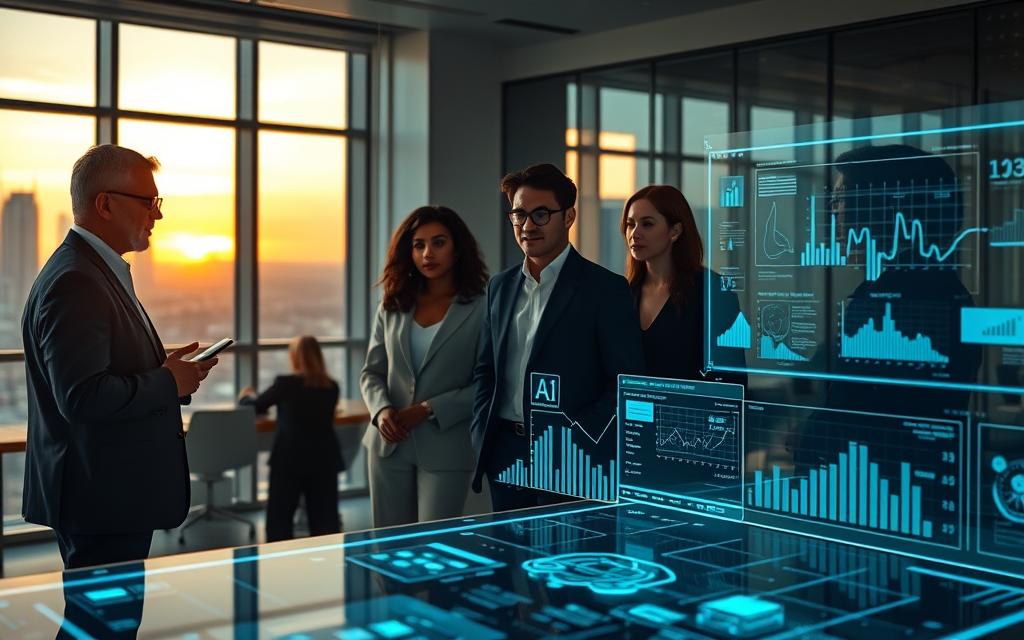
In healthcare, AI is helping a lot. It can spot diseases early and help doctors choose the right treatment. It’s also making things run smoother.
In finance, AI is fighting fraud and helping with big decisions. It looks at millions of transactions to find patterns. This lets people focus on the big ideas.
| Sector | Primary AI Applications | Impact Level | Adoption Rate |
|---|---|---|---|
| Healthcare | Diagnostic imaging, drug discovery, patient monitoring | High | Rapidly increasing |
| Finance | Fraud detection, algorithmic trading, risk management | Very High | Widespread |
| Manufacturing | Predictive maintenance, quality control, supply chain optimisation | Medium-High | Steady growth |
| Retail | Personalised recommendations, inventory management, customer service | Medium | Accelerating |
Ethical Considerations and Future Trends
AI is moving fast, and we need to think about the right things. We must protect data, avoid bias, and make sure someone is responsible. We need to make sure AI helps society, not hurts it.
There are a few key things to work on:
- Being clear about how AI makes decisions
- Fixing bias in AI
- Knowing who to blame when AI makes mistakes
- Keeping data safe
The future of AI looks like machines working with people. We’ll need AI that we can understand. We’re also working on making AI use less energy but stay powerful.
As AI gets better, we must focus on doing it right. We need to make sure AI is good for everyone. How we use AI will shape the future of many industries.
Renewable Energy Technologies
The world is moving towards sustainable energy, and renewable technologies are key. They help fight climate change and ensure energy security. These innovations offer cleaner energy options compared to fossil fuels.
Solar and Wind Power Innovations
The field of renewable energy tech has changed a lot. Solar panels now convert more sunlight into electricity, with some reaching 22% efficiency. Researchers are working on even better solar cells that cost less to make.
Wind power has also made big strides. New turbines are taller than the Statue of Liberty, catching stronger winds. Offshore wind farms are becoming more promising, thanks to floating turbines that can reach deep waters.
These improvements have led to a positive cycle. As more is made, costs go down. This makes renewable energy more competitive, even without government help in many places.
Advancements in Energy Storage
The biggest challenge for solar and wind power is their unpredictability. But new energy storage advancements have changed this. Modern batteries can store extra energy for when it’s needed most.
Lithium-ion technology is getting better, storing more energy while costing less. New storage options are also coming up:
- Flow batteries for large-scale grid storage
- Thermal storage systems using molten salts
- Compressed air energy storage in underground caverns
- Green hydrogen production through electrolysis
These energy storage advancements make renewable energy reliable. They turn solar and wind into main sources of power.
Global Adoption and Environmental Benefits
The world is quickly adopting renewable technologies. Countries everywhere are investing in clean energy. This is a big change in energy policy and infrastructure.
The benefits of this shift are clear. Renewable energy systems emit less greenhouse gases. They also cut down on air pollution, water use, and land damage compared to fossil fuels.
| Country | Renewable Energy Percentage | Annual CO2 Reduction (million tonnes) | Investment (2023, billion USD) |
|---|---|---|---|
| United States | 21% | 520 | 55.4 |
| Germany | 46% | 210 | 18.7 |
| China | 29% | 980 | 134.8 |
| United Kingdom | 43% | 130 | 16.2 |
| India | 23% | 340 | 14.5 |
The data shows that investing in environmental technology cuts emissions. As more countries adopt these technologies, the benefits will grow. This will help meet climate goals and ensure energy security.
These technologies are more than just energy sources. They mark a shift towards sustainable development. The future of renewable energy tech looks promising, with more efficiency, affordability, and access.
Biotechnology and Genetic Engineering
Modern medicine is changing fast thanks to new biological technologies. These changes are making healthcare, farming, and the environment better. They offer solutions to big problems we thought we couldn’t solve.
CRISPR and Gene Editing
CRISPR technology is a big step forward in genetic engineering. It lets scientists edit genes with great accuracy. This means we can treat genetic diseases that were once untreatable.
CRISPR works like molecular scissors, cutting DNA at specific spots. Scientists can then change or add genetic material. This has sped up research in many medical areas.
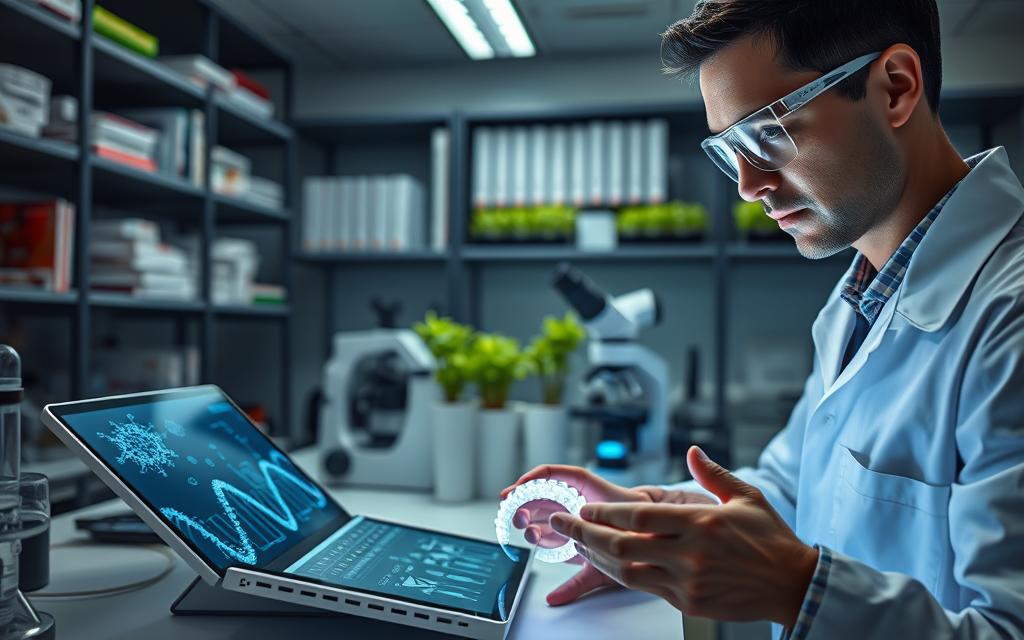
Medical biotechnology has made huge strides recently. Induced pluripotent stem (iPS) cells, created by Professor Shinya Yamanaka, are a big achievement. This discussion overlaps with api mean connecting software, especially for readers comparing most important technologies with similar issues. They're made without using embryos, solving ethical issues while keeping their healing power.
iPS cells are now used to test new drugs and treatments. They help researchers study diseases and create treatments just for each patient. Genome sequencing is also growing, helping doctors diagnose and treat better.
HIV research has seen big wins with bone marrow transplants. Some patients have stayed virus-free for years after getting transplants from donors with natural HIV immunity. This shows the power of genetic engineering against viruses.
Regulatory and Ethical Challenges
The fast progress in genetic engineering raises tough questions for rules. Governments are making laws to keep things safe while pushing for new ideas. These laws cover genetic changes in humans, animals, and crops.
Ethical debates are key in biotechnology. Important topics include:
- Consent and privacy in genetic testing
- Equitable access to advanced treatments
- Environmental impact of genetically modified organisms
- Long-term effects of human genetic changes
Scientists, ethicists, policymakers, and the public are having ongoing talks. These discussions help guide the right use of genetic technologies.
| Technology | Medical Application | Current Status | Future Promise |
|---|---|---|---|
| CRISPR-Cas9 | Genetic disorder treatment | Clinical trials | Curative therapies |
| iPS Cells | Drug testing and disease modelling | Research and limited clinical use | Personalised medicine |
| Genome Sequencing | Diagnostics and prevention | Widespread clinical use | Predictive healthcare |
| Gene Therapy | Cancer and rare diseases | Approved treatments available | Mainstream treatment option |
Biotechnology is changing medicine fast. There are challenges, but the benefits for health and wellbeing are huge. With careful development and rules, these technologies can help us a lot while solving ethical issues.
Blockchain and Cryptocurrency
Cryptocurrencies get a lot of attention, but blockchain technology is even more groundbreaking. It has uses beyond digital money. This system brings new levels of security and transparency to many fields around the world.
How Blockchain Technology Works
Blockchain is a digital ledger that spreads across many computers. Each block links to the one before it, making a chain. This means data can’t be changed without changing everything after it.
It uses special rules to check new data. Computers on the network agree on this data, so no single person controls it. This makes the system very hard to tamper with.
Use Cases Beyond Cryptocurrency
Blockchain is used in many areas, not just for money:
- Supply chain management – It helps track goods from start to finish, making everything clear
- Voting systems – It’s being looked at for secure online voting
- Digital identity verification – It lets people manage their own data
- Healthcare records – It keeps patient information safe and shared easily
- Real estate transactions – It makes buying and selling property faster and safer
These examples show how blockchain can solve big problems in different fields.
Security and Transparency Advantages
Blockchain is very secure because of its special coding. It’s hard to attack because there’s no single weak spot. Everyone has a copy of the whole ledger, keeping it safe.
It also lets everyone see what’s happening, but keeps some things private. This is great for keeping records that need to be checked but also kept secret.
But, there are challenges. It can be slow, uses a lot of energy, and faces rules that are not clear. Yet, people are working hard to fix these problems and make blockchain even better.
Once something is on blockchain, it can’t be changed secretly. This makes it perfect for keeping records that need to be trusted forever. More and more places are seeing how blockchain can change old ways of doing things.
Internet of Things (IoT)
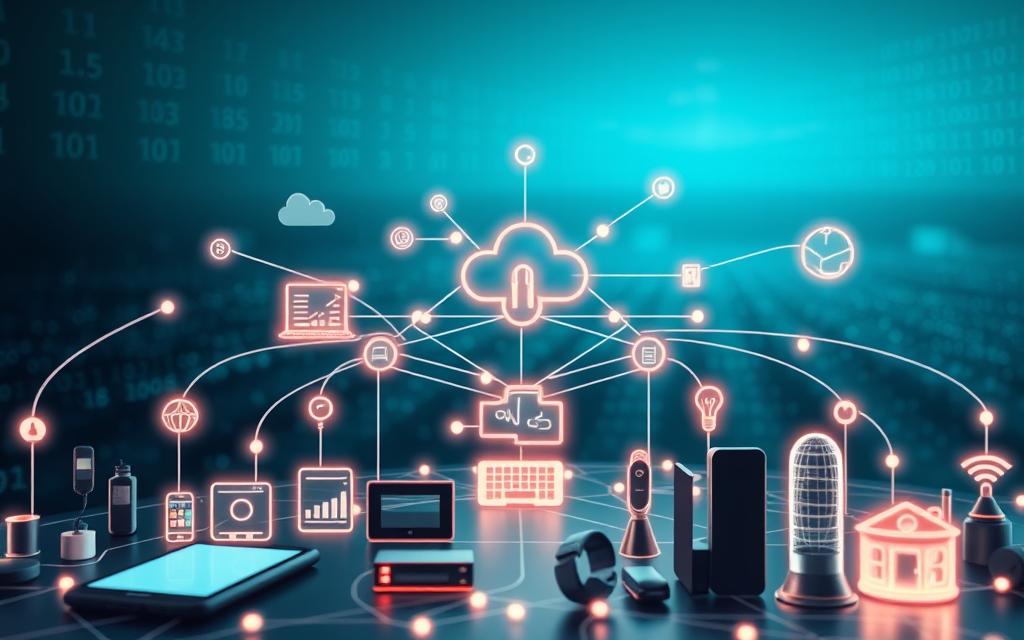
The Internet of Things is a big change in our digital world. It connects physical objects with sensors and software. This lets us collect and use data in many ways across different fields.
Connecting Devices and Systems
IoT uses a layered system for easy communication between objects and digital systems. At the base are devices with sensors that collect data in real-time.
These devices use Wi-Fi, Bluetooth, and other networks to share information. Then, software processes this data for use in various ways.
How IoT is set up can vary a lot. Industrial uses need strong security, while home uses focus on making life easier.
“The internet of things could equip more objects with sensors to collect physical data in real-time, revolutionising how we interact with our environment.”
Smart Homes and Cities
IoT has changed how we live at home. Smart thermostats save energy by learning our habits. Connected security systems keep us safe in real-time.
In cities, IoT can make life better too. It helps manage traffic and energy use. This makes cities more efficient and livable.
IoT and spatial computing work together in cities. They create spaces where digital and physical meet smoothly. This makes our interactions with technology more natural.
Data Privacy and Security Concerns
IoT’s wide reach raises big privacy issues. Each device is a risk for hackers to get to our personal info.
Experts say we need strong encryption and updates to stay safe. It’s key to keep devices secure from threats.
It’s important for makers to think about security when they create devices. Users should also know how their devices handle their data.
| Security Protocol | Implementation Level | Protection Strength | Recommended Use |
|---|---|---|---|
| Transport Layer Security | High | Excellent | Data transmission |
| Message Queuing Telemetry Transport | Medium | Good | Device communication |
| Constrained Application Protocol | Low | Basic | Resource-limited devices |
| Datagram Transport Layer Security | Medium | Good | Real-time applications |
Using these security steps helps keep our data safe. Companies should check their systems often for weak spots.
Teaching users about security is also key. Knowing the basics helps keep our info safe from hackers.
5G and Advanced Connectivity
Advanced connectivity is changing how we live, with 5G technology leading the way. It’s not just about faster internet. It opens up new possibilities that older mobile networks couldn’t handle.

The Evolution of Mobile Networks
From 1G to 5G, we’ve seen huge leaps forward. Each step brought big improvements:
- 1G introduced analogue voice calls
- 2G added digital encryption and texting
- 3G enabled mobile internet access
- 4G delivered broadband-like speeds for streaming
- 5G now offers ultra-low latency and massive device connectivity
Work on 6G has started, aiming for even more breakthroughs. This shows how each new generation builds on the last, making networks more advanced.
Enabling Real-Time Communication
5G’s super-fast speeds, often under 1 millisecond, enable real-time communication. This is key for fast responses in many fields.
Autonomous cars can talk to each other and the road instantly, avoiding crashes. Surgeons can do remote surgeries with precision from far away. Virtual reality feels real without delay.
Learn more about 5G in this detailed guide. It shows how 5G is changing more than just how we watch videos.
Impact on Industries and Innovation
The connectivity impact of 5G is huge across many industries. Factories use smart sensors for better production. Healthcare uses remote monitoring for quick patient updates.
Farming gets more precise with connected sensors. Cities get smarter with traffic systems that adapt to traffic. Entertainment creates immersive experiences that mix the real and digital worlds.
This change shows how 5G is key for digital progress in many areas. It’s not just about speed. It’s about new ways of doing business and services.
Quantum Computing
Traditional computing has led to many advances over the years. But quantum computing is a big change in how we handle information. It uses quantum mechanics to solve problems that would take a long time for regular computers.
Principles of Quantum Mechanics in Computing
Quantum computers work differently than old computers. They use qubits instead of bits. Qubits can be in more than one state at once, thanks to superposition.
Entanglement is another key idea. When qubits are entangled, changing one instantly changes the other, no matter the distance. This helps them solve problems in new ways.
Because of these features, quantum computers can handle lots of information at once. They can try many solutions at the same time. This makes them great for solving complex problems and simulations.
Potential Applications and Limitations
Quantum technology has many uses. In cryptography, it could break old encryption but also make new, safer ones. It could also help in finding new medicines and materials.
It’s also good for financial models and predicting the weather. These areas deal with complex systems that quantum computers are good at solving.
But, there are big challenges. Quantum systems need very cold temperatures and are very sensitive. They also make mistakes often, and growing them is hard.
“We’re not just building faster computers; we’re building computers that operate on entirely different physical principles.”
Current Research and Development
Big tech companies and research places are pushing quantum computing forward. IBM, Google, and Microsoft are making progress in qubits and fixing mistakes. They’re getting closer to making quantum computers work well.
Universities like MIT, Oxford, and ETH Zurich are also doing important work. They publish studies on quantum algorithms and better hardware. Governments like NASA and the NSA are funding research for many uses.
Recently, there have been big steps forward:
- 128-qubit processors showing quantum advantage
- Methods to reduce mistakes in quantum computers
- Systems that mix old and new computing
The world of quantum computing is changing fast. New discoveries are coming out every month. Even though we’re not there yet, the progress is exciting and could lead to big changes soon.
Conclusion
Our journey shows how AI, renewable energy, biotechnology, blockchain, IoT, 5G, and quantum computing are changing our future. These new technologies have the power to change industries and make our lives better.
These innovations work together in amazing ways. For example, AI and IoT make cities smarter. Blockchain makes data safer. Renewable energy powers our digital world. This mix opens up new chances but also brings big challenges.
We are in a time of huge tech change that will shape our future. As the source says, looking ahead helps us navigate these changes wisely. This summary shows why it’s important to get involved, not just watch.
Knowing about these technologies lets us help shape their future. The next few years will ask us to think carefully about how to use these advancements. We must also consider their ethical sides and make sure everyone has access.